




Senate Republicans are pushing a $1 billion White House security plan after a recent assassination attempt on President Donald Trump at the White House Correspondents’ Association dinner.
The proposal, part of a broader $70 billion Senate package focused on immigration enforcement and law enforcement spending, comes as the administration and GOP lawmakers and right-of-center social media influencers quickly seized on the incident to justify fast-tracking what has been considered a controversial ballroom project. Sen. Chuck Grassley (R-Iowa), chair of the Senate Judiciary Committee, released the proposal as part of the broader reconciliation package.
“The White House applauds Congress’s latest proposal in its reconciliation package, which includes additional funding for security infrastructure upgrades in relation to the long overdue East Wing Modernization Project,” White House spokesperson Davis Ingle told Military.com on Tuesday.
Lawmakers tied funding to that East Wing Modernization Project, a plan that includes the proposed ballroom, after pointing to the events of April 25 as evidence that large presidential events held outside the White House complex pose significant security risks.
The incident unfolded as an armed suspect attempted to breach security near the White House Correspondents’ Association dinner held at the Hilton, where Trump was in attendance for the first time. It prompted an immediate Secret Service response and lockdown procedures.
Within hours, Trump and senior officials pointed to the breach as proof that high-profile presidential events held outside the White House complex leave gaps in security, arguing that a permanent, hardened venue inside the complex—such as the proposed ballroom—would reduce exposure to external threats. Some event attendees in the incident’s aftermath scrutinized the lack of security to get into the dinner.
Military.com reached out for comment to the White House, the Department of Homeland Security, the U.S. Secret Service, Senate leadership offices for both parties, the Department of Justice and the National Trust for Historic Preservation.
What Money Goes Towards
The measure would direct up to $1 billion toward security upgrades at the White House complex, routing funds through agencies responsible for protecting the president, including the U.S. Secret Service.
The plan calls for structural hardening of above-ground facilities, expanded underground infrastructure, and counter-drone systems to address evolving threats, including unmanned aerial systems.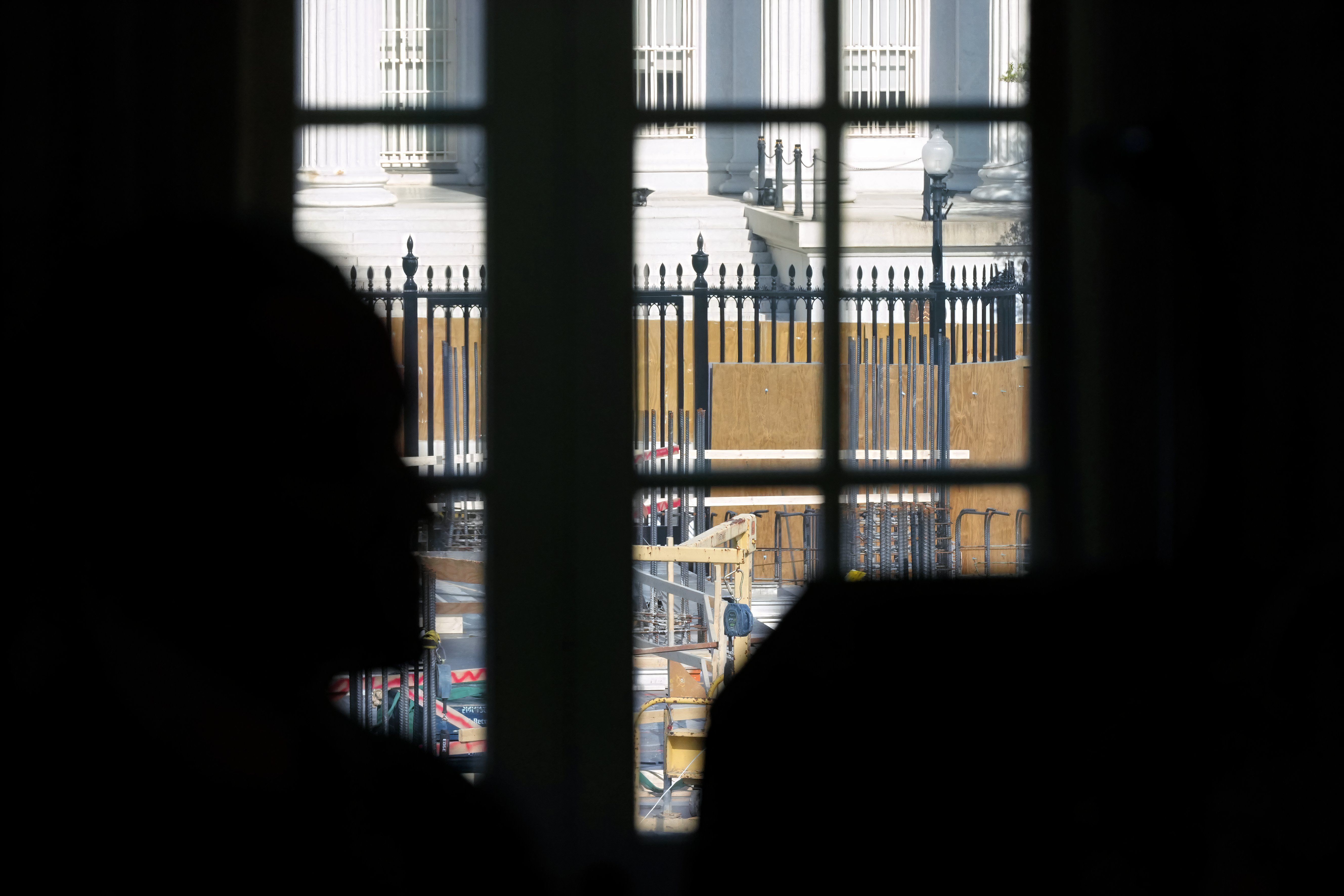 Recent security incidentsnear the White House have underscored the risks facing federal personnel and protective forces, with shootings and armed encounters prompting large-scale emergency responses and temporary lockdowns in areas surrounding the complex.
The ballroom itself is estimated at roughly $400 million. Trump has said it would be privately funded, sharpening the debate over how public and private costs could overlap.
Plan Reignites Political Fight
Democrats and outside groups argue that the proposal acts as a workaround to help advance the ballroom project, even if the funding does not directly pay for construction.
“The American people are weathering $5 gas, $6 diesel, and skyrocketing fertilizer costs because of the war of choice in Iran, and now the GOP want you to pay $1 Billion for a ballroom. Somebody help make this make sense,” Rep. Marcy Kaptur (D-OH) wrote Tuesday on X.
The White House argues the funding is necessary to address evolving security threats and complete long-delayed upgrades to the complex.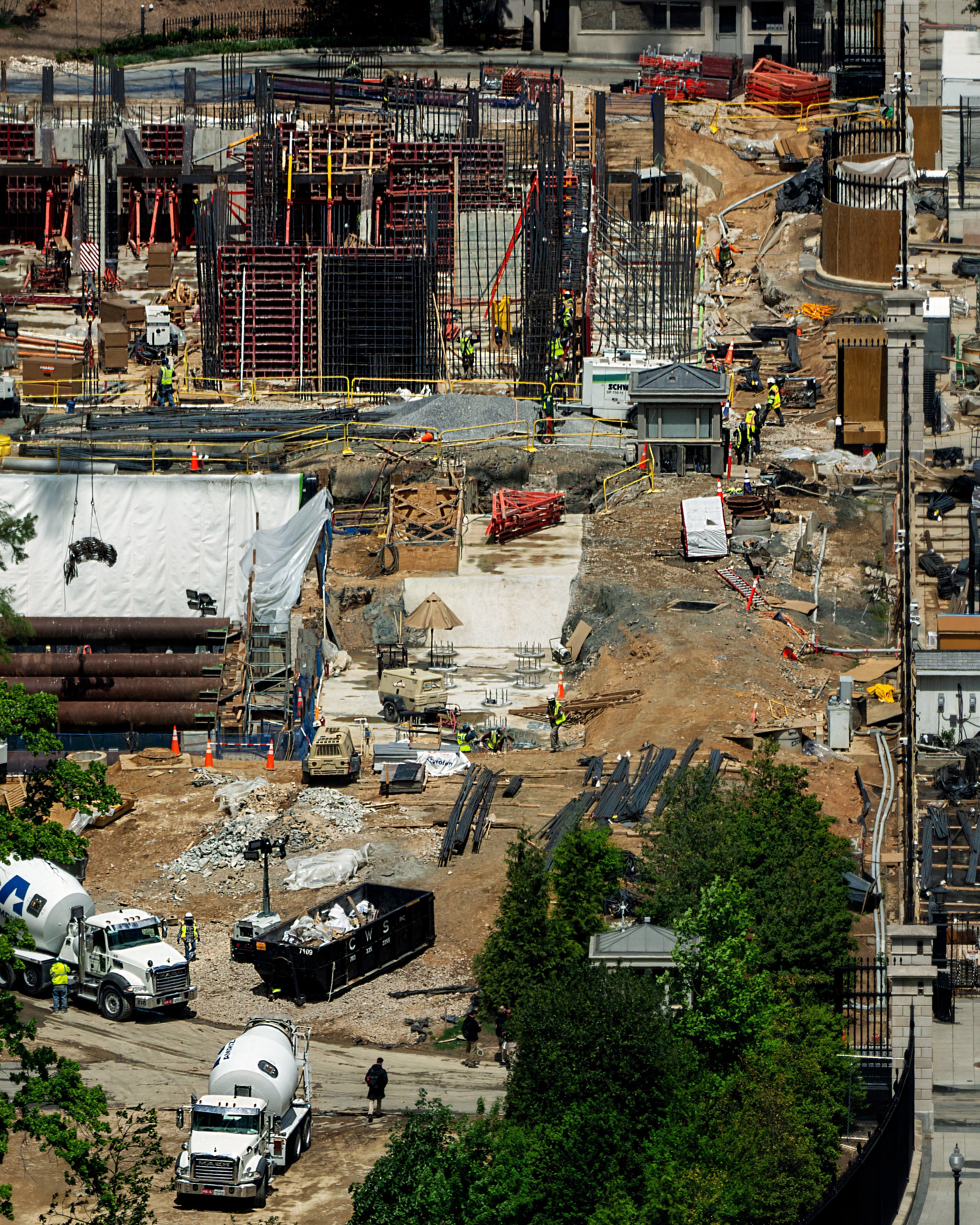
“Congress has rightly recognized the need for these funds. Due in part to the recent assassination attempt on President Trump at the White House Correspondents’ Dinner, the proposal would provide the United States Secret Service with the resources they need to fully and completely harden the White House complex,” Ingle said.
As President Trump has repeatedly said, the White House must be a safe and secure complex that generations of future presidents and visitors to the People’s house can enjoy.
Public safety concerns tied to high-profile federal sites have been a recurring issue, with previous incidents highlighting how even heavily secured areas remain vulnerable to sudden threats and require rapid coordination across agencies.
Read the full article here