




The first 48-72 hours of the investigation into what led to the fatal shooting of a woman in Minneapolis will shed more light on federal training and vetting practices though mixed messages from public officials in the investigation’s infancy are “not ideal,” a U.S. Navy veteran and former law enforcement member told Military.com.
A national conversation that has included public protests remains ongoing following the deadly shooting of a Minnesota mother, Renee Nicole Macklin Good, 37, by a U.S. Immigration and Customs Enforcement (ICE) officer on Wednesday. The Trump administration, shortly in the aftermath of the killing, accused the victim of “domestic terrorism” while local and state leaders have called on federal authorities to vacate the region to dissuade any further potential violence or aggression.
The ICE officer who killed Good has been reported by numerous sources to be Jonathan Ross, who according to records has served with the agency as a deportation officer since 2015. While the Department of Homeland Security (DHS) has not explicitly named Ross as the shooter, it has connected the identity of the agent to an incident last June where he was dragged by the vehicle of a fleeing suspect.
The disconnect between the statements made by federal officials, from DHS Secretary Kristi Noem all the way up to President Donald Trump, is not uncommon but it’s also “not ideal,” Justin Biedinger, a Navy veteran and former member of the Stockton Police Department in California, told Military.com.
“Investigators and operational leaders generally have to speak in evidence-and-process terms because facts can shift in the first 24-72 hours as video, forensics and witness statements come in,” Biedinger said. “Political leadership may speak more quickly in broader labels and narratives, but that comes with the risk that early labels can harden public opinion before investigators have completed the work.
“My view is straightforward: let the investigation play out and see where the evidence takes you. If leaders want to comment early, the most responsible approach is to be explicit about what is confirmed and what is still being verified. That’s how you protect public trust while the investigative process does its job.”
Urging for the investigation to play out has also been echoed by White House Border Czar Tom Homan, who implied a different perspective of the ongoing situation in Minneapolis and broke with DHS by waiting for all facts to be revealed via proper investigation.
What Investigation Looks Like Right Now
The current state of the investigation is in the FBI’s hands and will focus on locking down objective evidence and building a clear timeline, Biedinger said.
That equates to securing and reviewing all available video including body-worn camera footage, dash camera, nearby surveillance, and any residential doorbell footage; collecting physical evidence at the scene; documenting casing locations; preserving the vehicle for mechanical and data review; and conducting early witness interviews.
“A parallel track usually includes autopsy and toxicology, plus background interviews to establish decision making, intent and any contributing factors,” he said. “Investigators will also take formal statements from involved personnel, and the case will go through use-of-force review processes as the facts are validated.”
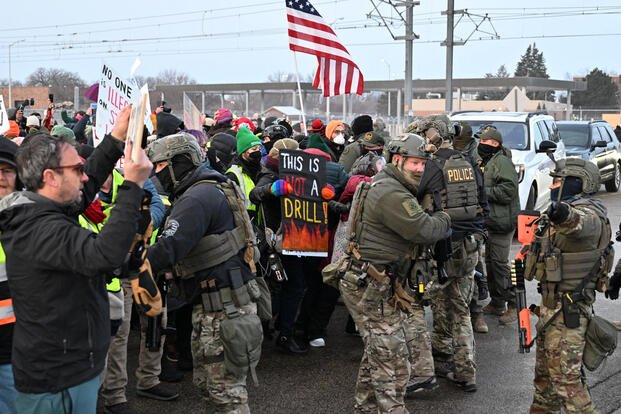
Local and statewide officials in Minnesota have criticized the federal government for essentially locking them out of the investigation, with officials saying Thursday that the state’s Bureau of Criminal Apprehension (BCA) was denied access to the probe—causing concerns related to transparency and public trust.
Training Practices In Play
The value of training standards comes into play during what Biedinger described as the “decision window,” or when and where an incident rapidly escalates.
“At the heart of the issue is whether your people have been trained on, and tested in, clearly articulated principles of use-of-force, threat assessment, and the proportional response in a high stress situation,” he said.
Training in scenarios such as this specific case, which involved a crowded scene of bystanders and vehicles, is also “critical” to avert escalation.
“In my experience, staffing and support influence outcomes,” Biedinger added. “When teams are undermanned or operating without adequate backup, it increases tension and compresses decision time—which can make de-escalation harder.”
How ICE Agents Should Be Vetted
Biedinger is the founder and president of Guardian Alliance Technologies, a company that provides cloud-based software designed to improve the process of vetting and hiring of public safety personnel. His years conducting hundreds of background investigations for sworn and non-sworn roles have lent themselves to this current platform used by more than 1,300 public safety agencies across 49 states to modernize vetting and flag risk earlier.
In the case of ICE, he didn’t say one way or another if the agency is properly vetting its applicants. However, he did say that vetting “is a balancing act between speed and rigor and can be especially susceptible to erosion when an agency is under pressure to fill seats.”
Training and vetting practices by ICE have drawn scrutiny all the way to the halls of Congress, where lawmakers have questioned deployed tactics as federal officials have touted recruiting booms. There have been claims previously reported by Military.com that ICE is sacrificing standards to more swiftly hire officers.
The baseline for vetting and hiring includes protocols similar to what have always existed, including background investigations, reference checks, integrity screening, and fitness for duty assessments.
“The smarter path is to modernize vetting and recruiting to increase throughput without decreasing the bar,” Biedinger said. “Technology can help agencies do that by removing administrative bottlenecks and speeding up background workflows in order to get the staffing right, and to relieve pressure on the personnel in the field.”
Read the full article here