



Ammo looks simple at a glance: projectile, case, powder, primer. Once you begin to sort through calibers, bullet designs, and intended use, the choices multiply. This guide strips the jargon away and explains what matters for range time, hunting, competition, and personal defense. Read it with a purpose in mind and you’ll pick ammunition that performs reliably when it counts.
Quick overview: the anatomy of a cartridge
Most modern cartridges share four basic parts:
- Case — the container that holds everything together. Common materials are brass, steel, and aluminum.
- Primer — the small cap at the base. A firing pin crushes it, igniting the powder.
- Propellant — the powder that creates gas and propels the bullet. Modern ammo uses smokeless powder.
- Projectile — the bullet itself. Shapes and constructions vary depending on purpose.
Rimfire and centerfire are the two main ignition systems. Rimfire (mostly .22 LR) has the priming compound in the case rim. Centerfire uses a removable primer seated in the case head. For most shooters, centerfire means reloadable cases and higher pressures. Rimfire remains inexpensive and ideal for plinking and small-game hunting.
Types of ammunition by purpose
Think of ammo types as tools. Choose the tool to match the job.
Target / plinking: Full metal jacket (FMJ) or plated bullets. Cheap, accurate, and designed to feed reliably in range-style firearms.
Self-defense / law enforcement: Jacketed hollow point (JHP) or bonded bullets designed to expand and stop a threat with less over-penetration.
Hunting: Soft point, bonded, monolithic (solid copper) or controlled-expansion bullets selected to deliver deep penetration and reliable weight retention.
Competition: Match-grade loads with consistent powder charges and high-precision projectiles.
Training / high-volume practice: Low-recoil or reduced-power loads that still cycle semi-auto platforms.
Specialty: Frangible rounds for close-range training and steel-core armor-piercing (restricted in many areas).
Handgun ammo essentials (popular calibers and types)
9mm: types of 9mm ammo
The 9mm is the world’s most popular handgun caliber. It is used by militaries, police, and millions of civilians.
9mm FMJ — Cheap, reliable for practice.
9mm JHP (hollow point) — Designed to expand on impact. Common defensive loads include 124–147 grain bullets with a variety of expansion profiles.
+P and +P+ — Higher-pressure 9mm loads that increase velocity and energy. These improve terminal performance but also increase recoil and wear on some pistols. Confirm your firearm is rated for +P.
Lead round nose and plated — Older styles, sometimes needed for single-action revolvers or vintage handguns that are picky with hollow points.
When choosing 9mm ammo for defense, test several brands to ensure reliable feeding and acceptable recoil for quick, accurate follow-up shots.
Other popular handgun calibers
.380 ACP — Smaller, lighter recoil. Often found in compact carry pistols. Use modern hollow points for defense.
.38 Special / .357 Magnum — Revolver staples. .38 Special is mild and shootable, while .357 Magnum offers magnum power in a revolver.
.45 ACP — Slower, heavy bullets that deliver strong knockdown. Use hollow points for carry.
.40 S&W — High-energy defensive option that bridges 9mm and .45 ACP in performance and recoil.
Rimfire basics: .22 types of ammo
.22 LR remains the most affordable and versatile round. Typical .22 types of ammo include:
Standard velocity (subsonic) — Quiet and accurate for small game and indoor range use.
High velocity — Faster, flatter trajectory, useful for informal target shooting.
Stinger / Hyper-velocity — Very fast, but can be harder on firearms with certain actions.
HP and hollow points — Designed for small-game hunting and pest control.
Plated lead or solid lead FMJ — Often cheaper and reliable for bulk practice.
.22 LR is ideal for training new shooters, sighting optics, and edge-case hunting. Note: rimfire ammo is not reloadable.
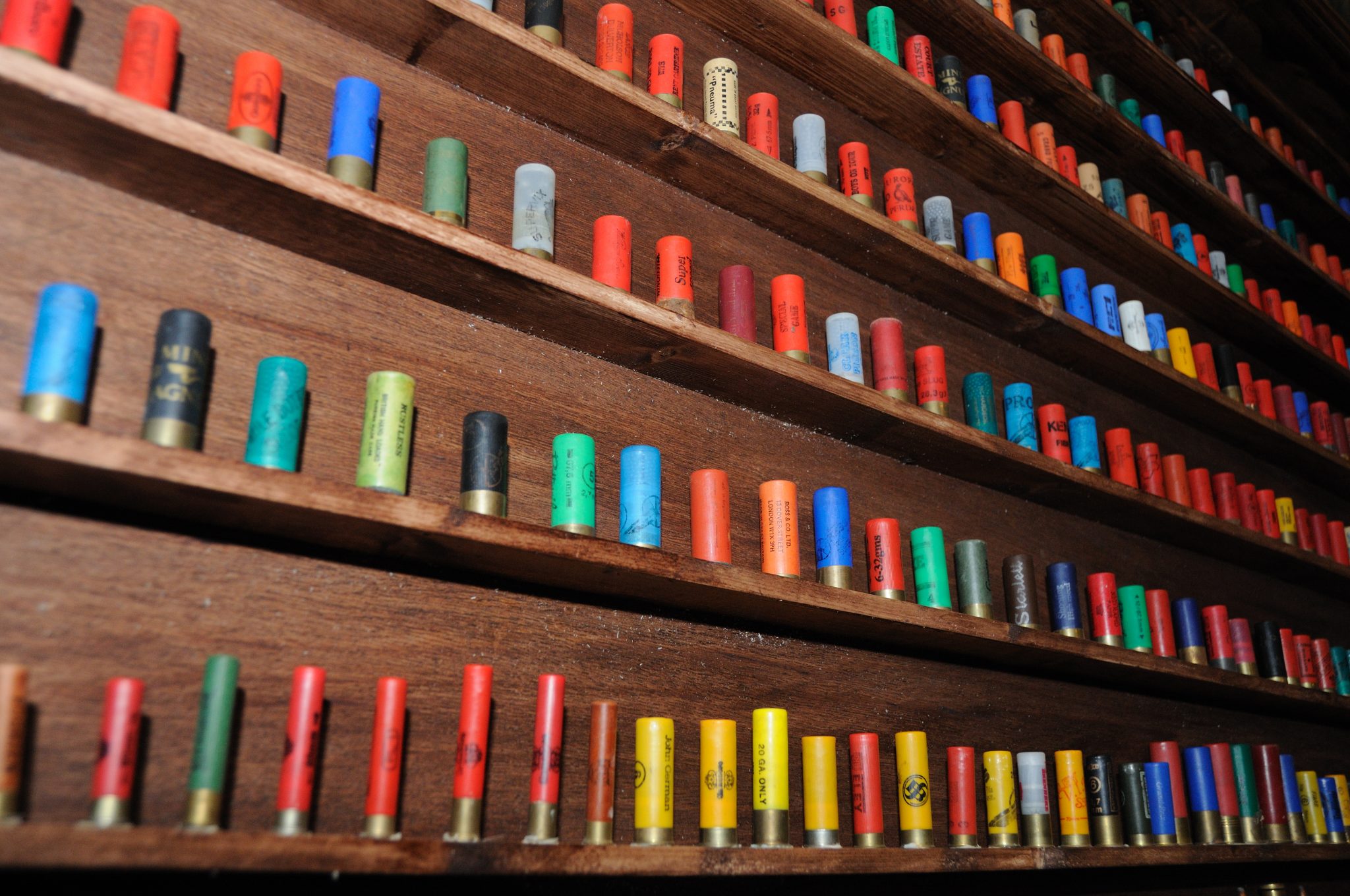
Shotgun ammo explained: shotgun ammo types & 12 gauge ammo types
Shotguns are wildly versatile because you can change the payload to match the job. Here’s how to think about shotgun ammo types, with emphasis on 12 gauge because it is the most common.
Shot sizes and shot type
Birdshot — Many small pellets. Sizes range from #9 (very small, for clay targets) to #2 or BB for upland game.
Buckshot — Larger pellets for deer-sized game and defense. Typical sizes include 00 (double-aught), 0, and #1.
Slugs — Single heavy projectile for big game or short-range precision from a smoothbore.
Steel, Bismuth, Tungsten — Non-lead alternatives used where lead is banned. Steel pellets are common and less dense, so they have different ballistics. Tungsten and bismuth are premium and perform closer to lead.
12 gauge ammo types (common uses)
12 ga birdshot — Upland hunting and clay targets. Choose shot size for species and range.
12 ga buckshot — Home defense and big-game in close ranges. 00 buck is common in law enforcement loads.
12 ga slugs — Hunting deer or hogs where a shotgun is permitted; good for neglected optics or close-range shots.
Low recoil loads — Reduced powder or lighter payloads for training or recoil-sensitive shooters.
When selecting shotgun ammo, consider shot size, payload weight (e.g., 1 1/8 oz), and velocity. For waterfowl, use approved non-lead shot.
Rifle ammo: common calibers and what they do
Rifle ammunition covers the widest spectrum of performance. Here are common types and their typical uses.
.223 / 5.56 NATO
Lightweight, low recoil, flat shooting. Popular for varmint hunting, training, and tactical use. Note: 5.56 NATO often runs at higher pressure than .223 Remington; verify firearm compatibility.
6.5 Creedmoor
Excellent long-range performance with high ballistic coefficients and moderate recoil. Common in precision shooting and mid-to-large game hunting.
.308 Winchester / 7.62 NATO
Versatile medium-bore round for hunting and competition. Reliable, accurate, and widely available.
.30-06 Springfield
Classic hunting cartridge with a broad range of bullet weights. Good for everything from deer to elk.
.300 Winchester Magnum, .338 Win Mag
Magnum rounds for long-range big-game hunting and situations requiring extra energy and flatter trajectory.
Specialty and big-game rounds
.375 H&H, .458 Win Mag — Dangerous-game calibers for large and potentially aggressive species where deep penetration and big-diameter bullets are required.
Bullet construction and why it matters
Bullet design determines how energy transfers and how deep the projectile will penetrate.
Full Metal Jacket (FMJ) — Jacket covers lead core. Primarily for target shooting. Tends to over-penetrate in defensive scenarios.
Jacketed Hollow Point (JHP) — Hollow cavity expands on impact. Preferred for self-defense.
Soft Point (SP) — Exposes lead tip to expand while the jacket retains mass for deeper penetration. Common in hunting.
Bonded bullets — Core and jacket are chemically or mechanically bonded to resist separation upon impact. Great for heavy bones and large mammals.
Monolithic / solid copper — Non-jacketed copper bullets that hold weight and penetrate deeply. Often used where lead is restricted or when maximum weight retention is desired.
Boat-tail and polymer tip — Designed for long-range accuracy with aerodynamic efficiency and controlled expansion.
Match bullet construction to the target. If you hunt elk or bear, favor bonded or monolithic designs that resist fragmentation. For self-defense, modern hollow points offer rapid and reliable expansion while reducing risk to bystanders.
Ballistics basics: velocity, energy, and BC
Velocity (fps) — How fast the bullet flies out of the barrel.
Energy (ft·lb) — A function of mass and velocity that approximates the bullet’s ability to do work on impact.
Ballistic Coefficient (BC) — A measure of how well a bullet resists wind and retains velocity. Higher BCs are better for long-range shooting.
Remember that energy alone does not guarantee effectiveness. Placement, bullet construction, and terminal performance are equally important.
Ammunition storage and shelf life
Ammo is durable, but storage matters.
- Keep cartridges in a cool, dry place.
- Avoid extreme temperature swings and direct sunlight.
- Store in original boxes or sealed metal cans with desiccant packs if humidity is a concern.
- Properly stored ammo can remain serviceable for decades; however, primers and powders can degrade over very long periods.
Always inspect old ammo before use. Loose primers, corroded cases, or deformed bullets are signs to discard.
Reloading: benefits and cautions
Handloading offers custom performance and cost savings for high-volume shooters. Benefits include:
- Tailoring loads for hunting, competition, or reduced recoil.
- Producing match-grade rounds with consistent performance.
- Economical for expensive calibers and niche cartridges.
Cautions:
- Reloading requires knowledge, proper equipment, and strict adherence to published load data.
- Small errors can produce catastrophic failures. Always start low on powder charges and work up safely.
- Use reputable manuals and never mix components haphazardly.
Legalities and safety
- Check local laws for restrictions on certain ammo types, such as armor-piercing rounds, tracer, or exploding projectiles.
- Waterfowl and other wildlife hunts may require non-lead shot. Familiarize yourself with regional regulations.
- Practice safe handling: treat every cartridge as live, store ammo away from unauthorized users, and never modify ammunition to alter its destructive potential.
How to choose ammo for your needs
- Define your purpose: target practice, carry, hunting, or competition.
- Pick the right caliber for your firearm and intended game.
- Choose bullet construction that matches the target (FMJ for practice, JHP for defense, bonded/monolithic for large game).
- Test for function: reliable feeding and consistent accuracy in your firearm.
- Consider logistics: availability, cost, and legal restrictions.
Closing thoughts
Match your ammunition to the task and test it in your firearm. For range days, buy quality practice rounds. For home defense and hunting, select modern, purpose-built projectiles and verify they feed and shoot accurately in your gun. The right cartridge improves safety, ethical outcomes, and day-after-day confidence.
Frequently asked questions
Is 9mm adequate for self-defense?
Yes. Modern 9mm hollow points provide reliable expansion and stopping power. Training and shot placement are essential.
What is the difference between .223 and 5.56?
They are dimensionally similar. 5.56 NATO is typically loaded to higher pressure. Use ammo compatible with your rifle’s chambering.
Can I use steel shot for duck hunting?
Yes, where non-lead regulations require it. Be aware steel is less dense than lead and has different ballistics.
How often should I replace stored ammo?
Properly stored ammo lasts a long time. Replace if you see corrosion, loose primers, or poor performance, otherwise there’s no fixed expiration.
Read the full article here