




A 23-year-old Canadian sniper wearing an eye patch walked into the Dutch city of Zwolle just after midnight on April 14, 1945, armed with two submachine guns and a bag of grenades. His best friend lay dead at the city’s edge. Over the next six hours, Private Leo Major terrorized German defenders into believing thousands of Canadian troops had launched an all-out assault.
By dawn, the German garrison had fled and 50,000 Dutch civilians avoided the artillery barrage planned for later that morning. In 2018, more than 70 years after that night, Dutch soccer fans at a FC Zwolle game unfurled a massive banner declaring Major the “sole saviour of Zwolle.” The city has never forgotten their lone liberator.
A Soldier Who Refused to Quit
Major was born in Massachusetts to French-Canadian parents, who relocated to Montreal while he was a child. Because of a difficult relationship with his father, he moved in with an aunt.
Major enlisted in the Canadian Army in 1940, partly to prove himself in the eyes of his father. He joined Le Regiment de la Chaudiere and landed on D-Day with the regiment as part of the 3rd Canadian Infantry Division.
Shortly after, Major captured a German Halftrack by himself, killing and capturing several Germans in the process.
Days later, a phosphorus grenade exploded near him during a fight with an SS patrol, destroying 80% of the vision in his left eye. Medical officers wanted to evacuate him to England, but Major refused. He convinced his commanders that snipers only needed one good eye and kept fighting, wearing an eye patch for the rest of the war.
During the Battle of the Scheldt in fall 1944, Major captured 93 German prisoners on his own while searching for a missing patrol. In February 1945, he helped load bodies into a troop carrier when it hit a landmine. The blast killed everyone else in the vehicle and broke Major’s back in three places, along with four ribs and both ankles.
Doctors again told him the war was over for him. A week later, Major escaped the hospital and hid with a Dutch family in Nijmegen for nearly a month before rejoining his regiment in March.
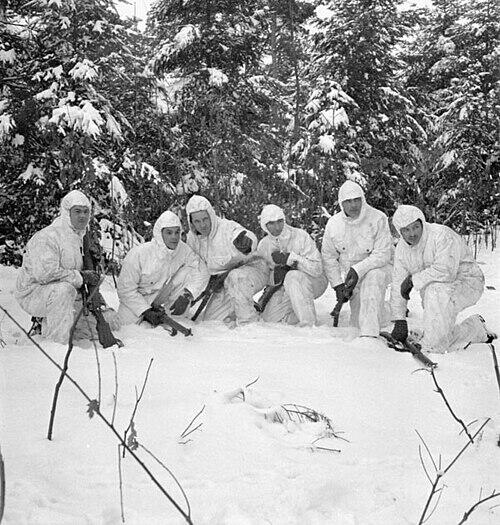
The Night Zwolle Fell
On April 12, 1945, the Regiment de la Chaudiere reached Zwolle, a city of 50,000 defended by German Wehrmacht and Waffen-SS troops. Sources differ on garrison strength, with estimates ranging from several hundred to more than 1,500 soldiers.
The regiment’s commanding officer asked for volunteers to scout German positions before Canadian artillery opened fire on the city the next morning. Major and Corporal Wilfrid Arsenault stepped forward.
They left at 9:30 p.m. on April 13 and moved through the darkness to the city’s outskirts. They stopped at a farm where a Dutch family gave them information about German defensive positions.
Around midnight, as they approached the railroad tracks ringing the city, a German machine gunner opened fire from a concealed position. Arsenault was killed instantly. Major charged the position through the incoming fire and killed the crew with his Sten gun, avenging Arsenault’s death.
Despite the loss of Arsenault, Major decided to continue the mission alone. The Germans in the city stood no chance against the enraged one-eyed Canadian soldier.
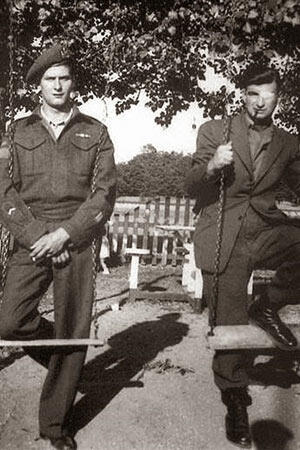
Six Hours of Chaos
Major entered Zwolle’s city center around 1 a.m. carrying two Sten guns and a bag of grenades. He found the streets largely deserted. For the next six hours, he moved through the city firing his weapons and throwing grenades to make it sound like a major Canadian offensive was underway.
Confused, the German defenders jumped out of bed or left their positions to see what was going on. Major managed to attack and even capture dozens of German soldiers who genuinely thought they were being overrun by the Canadian Army.
Major also contacted members of the Dutch resistance. He then organized them into patrols at strategic points throughout the city, causing even more confusion for the German garrison.
At one point, he entered a bar where German officers were drinking and held them hostage. He found an Alsatian officer who spoke French and convinced him the city was surrounded by thousands of Canadian troops. Major warned that artillery would begin shelling at 6 a.m., killing German soldiers and Dutch civilians alike.
Major urged them to surrender or evacuate the city to spare themselves and the locals. Major then returned the officer’s sidearm, likely to seal the notion that this was serious.
Major then set fire to the Gestapo headquarters to intensify the chaos. The combination of constant gunfire, explosions, resistance patrols appearing throughout the city, and the burning headquarters convinced German commanders they faced a full-scale assault.
By 4:30 a.m., the German garrison began withdrawing across the IJssel River. For the first time in five years, Zwolle was free from the Germans.
Major contacted the resistance to confirm Zwolle was free, then waded across a canal to retrieve Arsenault’s body. He returned to Canadian lines at 9 a.m. and reported the city liberated. The planned artillery bombardment was canceled, and the Regiment de la Chaudiere entered Zwolle unopposed.
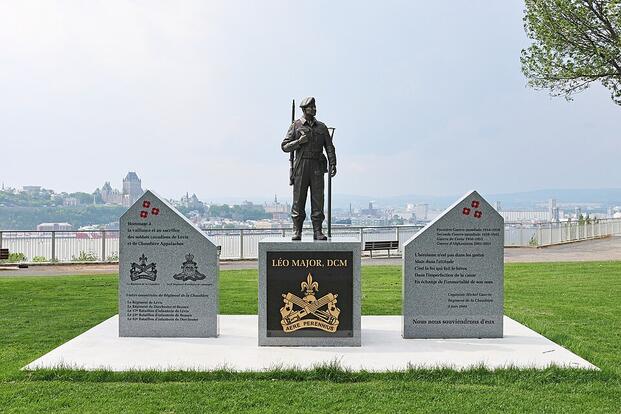
Remembered in Zwolle
Major never spoke about Zwolle to his family. His son was nine years old when a Dutch official arrived at their Montreal home 30 years after the war ended and spoke of his father’s heroism.
When his wife asked why he never mentioned it, Major said he didn’t think anyone would believe him. Major’s official DCM citation praised his “gallant conduct” and noted his actions enabled the city’s capture.
His citation read in part: “Undaunted by the death of a friend and comrade, he continued to patrol alone for 6 hours, contacting the underground and formed patrols of the local Dutch civilians, with the result that by morning the enemy garrison menaced from inside and from outside, were forced to withdraw.”
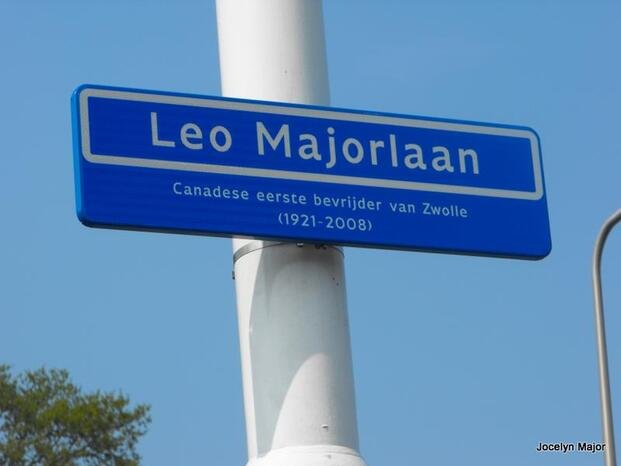
The city of Zwolle named a street Leo Majorlaan in his honor and made him an honorary citizen in 2005. The liberation story is taught in local schools.
Zwolle’s mayor, Henk Jan Meijer, said Major became “a symbol of our freedom” and stressed the importance of teaching children that freedom is vulnerable and must be protected. Numerous citizens of the town have expressed their gratitude and admiration for the Canadian that freed their town.
Major’s Distinguished Conduct Medal for his actions in Zwolle made him one of only three soldiers in British Commonwealth history to receive the DCM. He remains the only Canadian to win it twice.
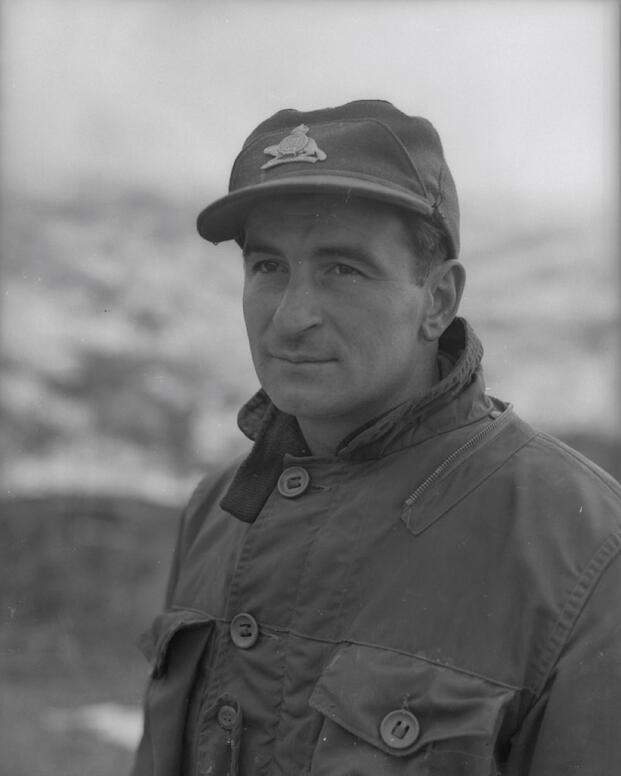
During the Korean War in November 1951, he led 18 scouts in a midnight assault that captured Hill 355 from Chinese forces. Despite being outnumbered, his men held the strategic position for three days against repeated counterattacks, earning Major a bar to his DCM.
Major visited Zwolle several times after the war before his death in Montreal on Oct. 12, 2008, at age 87. In 2020, Canada Post issued a stamp honoring “The One-Eyed Ghost” on the 75th anniversary of VE Day. He remains one of the most legendary figures in Canadian military history and one of the greatest warriors of WWII.
Story Continues
Read the full article here