




By November 1944, Nazi Germany was collapsing. Soviet forces drove westward through Eastern Europe while the Western Allies advanced from the west and south. For the first time in the war, American and Soviet troops operated in the same theater.
On Nov. 7, 1944, the convergence of both forces in Central Europe led to the only documented direct combat between American and Soviet forces in history. American P-38 Lightning fighters attacked what the pilots believed was a German convoy near Niš, Yugoslavia. Instead, they strafed a Red Army column, killing more than 30 Soviet soldiers including a lieutenant general. Soviet fighters scrambled, and for 15 minutes, the allies fought each other in the skies over Niš.
Two American P-38s went down. The Soviets lost three Yak-9 fighters. Both governments immediately classified the incident to avoid giving Nazi Germany propaganda showing the Allies were fractured.
The Soviet Drive Through the Balkans
After liberating Bulgaria in September 1944, Soviet forces pushed into Yugoslavia and liberated Belgrade on Oct. 20. German forces retreated north toward Hungary.
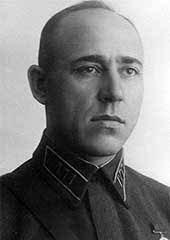
Lt. Gen. Grigory Kotov’s 6th Guards Rifle Corps received orders to march through Yugoslavia to reinforce forces preparing to attack Hungary. On Nov. 7, Kotov’s convoy moved from Niš toward Belgrade. The date marked the anniversary of the October Revolution, and Soviet troops decorated their vehicles with red banners. Some accounts state the column included an orchestra to celebrate.
Kotov, 42, traveled with his men. The combat veteran apparently felt safe in recently liberated territory.
The U.S. Fifteenth Air Force, based in Foggia, Italy, had been flying missions against German columns retreating from Greece, helping trap German units before they escaped north. Partisans in the region also harassed German troops as they fell back.
In one of the most contested regions of Europe, the Western Allies, Soviets, partisans, and Axis troops fought in the same combat area. At times, Allied fighters actively supported Soviet ground troops as they advanced.
Both sides took great strides to avoid friendly fire incidents, but accidents were bound to happen.
The Mission and the Mistake
On Nov. 6, the 82nd Fighter Group successfully supported Soviet troops as they blitzed into the area. Soviet officers requested another strike for Nov. 7 targeting German transport between Sjenica and Mitrovica, about 60 miles southwest of Niš.
Col. Clarence T. “Curly” Edwinson led three squadrons of P-38 Lightnings into the area. Unfortunately, Soviet forces had advanced 60 miles farther than the American commanders realized. Edwinson’s group had taken off with outdated intelligence.
The 95th Fighter Squadron destroyed a German locomotive near Sjenica. German anti-aircraft fire then hit Capt. Charles King’s P-38. King crash-landed and was rescued by local civilians and Chetnik forces.
At approximately 10 a.m., flying over Mount Jastrebac, the squadrons spotted a vehicle column. Based on their intelligence and the fire they received that morning, they assumed it was a German column. The location also matched their mission area and it was known that German forces were retreating through the region.
Edwinson’s squadrons attacked. On the ground, Soviet soldiers looked up and watched the planes come in. They did not initially react, likely even realizing the planes were American and assumed they were there to support them.
The first flight strafed the lead vehicles. As their vehicles were hit, the Soviets spread out and took cover. The strafing runs were devastating, blowing up several trucks and killing or maiming the embarked troops.
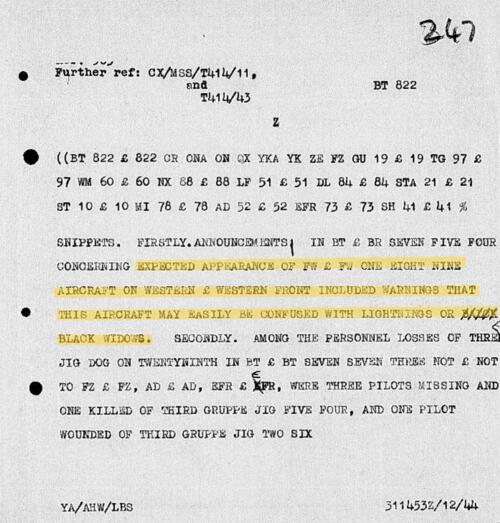
Soviet soldiers started waving red banners. The P-38 pilots, focused on the strafing runs, either did not see the signals or did not understand them. They failed to realize what they had just done. Meanwhile, Soviet forces likely reported they were being attacked by Luftwaffe planes. The P-38 was often mistaken for German FW-189 fighters.
The attack killed 31 Soviet soldiers and wounded 37. Lt. Gen. Kotov died at the head of his column. At Niš airbase five miles away, Gen. Vladimir Sudets heard the sounds of combat and ordered his fighters to scramble.
The Air Battle
Soviet anti-aircraft guns opened fire. One P-38 took several hits and crashed about half a mile north of the field.
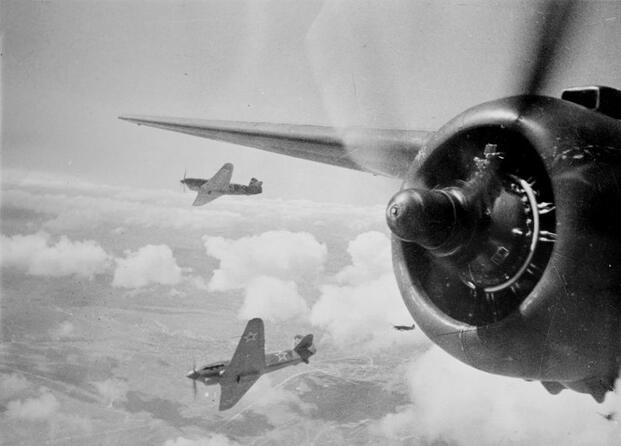
Meanwhile, Yakovlev Yak-9 fighters began scrambling from Niš airfield. The P-38s, seeing fighters taking off, shifted their attack to the airfield. Despite prominent red star markings on the Yak wings, the P-38 pilots opened fire. One Yak-9 exploded on takeoff.
The P-38s climbed to about 1,600 feet and formed a defensive circle above Niš. Edwinson’s pilots likely noticed they were in a confusing situation. Then again, later accounts suggest the American pilots saw the red star markings and attacked anyways.
However, the Soviet fighters that launched directly engaged the circling Lightnings. The Americans took that as a sign that they needed to fight. One Yak pilot set a P-38 on fire. Another Soviet pilot used a vertical climb to get underneath the P-38 and downed it.
From a second airbase, Capt. Aleksandr Koldunov led another group of Yak fighters into the battle. Koldunov was 21 years old and already a decorated combat ace with 15 confirmed kills against the Luftwaffe.
When Koldunov’s fighters joined, approximately nine Soviet Yaks were engaged with roughly a dozen American P-38s over Niš. Dogfights swirled across the sky. Yugoslav civilians and partisans on the ground watched as aircraft with both American and Soviet stars fought each other.
The combat lasted about 15 minutes. Soviet anti-aircraft gunners accidentally shot down one of their own Yak-9s.
Then someone made visual contact close enough to positively identify the markings. Soviet accounts credit Koldunov with flying close to Edwinson’s lead P-38 and waggling his wings to display the red star. American pilots suddenly realized they were fighting Soviet forces.
The P-38s broke off and headed south. Soviet fighters escorted them to the edge of Soviet-controlled territory, then turned back.
Two American P-38s had been shot down and several more damaged, with two pilots killed. Soviet troops recovered the bodies and confirmed their identity through documents in the wreckage. The Soviets allegedly lost three Yak-9 fighters, two to American fire and one to their own anti-aircraft guns.
The Cover-Up Attempt
When Edwinson landed at Foggia, he did not report the incident. He went on leave, suggesting he knew something had gone wrong but wanted to avoid responsibility.
Three days later, Red Army Deputy Chief of Staff Gen. Aleksei Antonov contacted Maj. Gen. John R. Deane, chief of the American military mission in Moscow. American leadership was blindsided by the news. An investigation was ordered. Soviet troops had recovered two American pilots’ bodies from crashed P-38s near Niš, proving their convoy was attacked by Allied forces.
On Dec. 14, 1944, Ambassador W. Averell Harriman formally apologized on behalf of President Franklin D. Roosevelt and Army Chief of Staff Gen. George C. Marshall.
The official explanation for the incident was pilot navigational error. The pilots believed they were attacking German forces southwest of the actual attack site.
However, Edwinson’s formation flew more than 50 miles past their intended target into Soviet-controlled territory. They had hit a German locomotive earlier, confirming their position, then flew farther northeast and attacked a different column.
Fifty miles represents a massive error for experienced pilots in clear weather. Some historians question whether the attack was truly accidental, noting U.S.-Soviet tensions over postwar plans were already developing by late 1944.
Harriman offered to send liaison officers to prevent future incidents. Stalin rejected the proposal, stating boundaries had already been established and should be enforced.
Edwinson was reassigned stateside and eventually retired as a brigadier general before dying in 1985.
Secrecy and Legacy
Both governments classified the incident to avoid giving Nazi Germany propaganda. It remained secret throughout the final months of the war.
Koldunov survived with 46 victories across 412 sorties. He earned a second Hero of the Soviet Union award in 1948 and rose through Soviet air defense ranks. By 1978, he commanded the Soviet Air Defense Force. He became chief marshal of aviation in 1984. He was fired in May 1987 after German pilot Matthias Rust flew a Cessna to Moscow and landed unopposed near Red Square. Koldunov died in 1992.
The incident remained secret in the Soviet Union until the 1960s, when several officers published memoirs about the battle. Because the attack occurred on the anniversary of the October Revolution, some Soviet writers claimed it was deliberate. Gen. Sergey Biryuzov called it a “provocative raid” in 1963.
After the Soviet Union’s fall, division commander Boris Smirnov claimed he found a map on a dead American pilot showing Niš marked as a target. No other evidence supports this. Official Soviet reports from 1944 accepted the American navigational error claim as the likely reason for the incident.
Casualty figures remain disputed. American records state two P-38s and four Soviet aircraft were lost. Soviet reports claimed three or four P-38s. Yugoslav partisan officer Joko Drecun wrote seven American aircraft and three Soviet aircraft were destroyed.
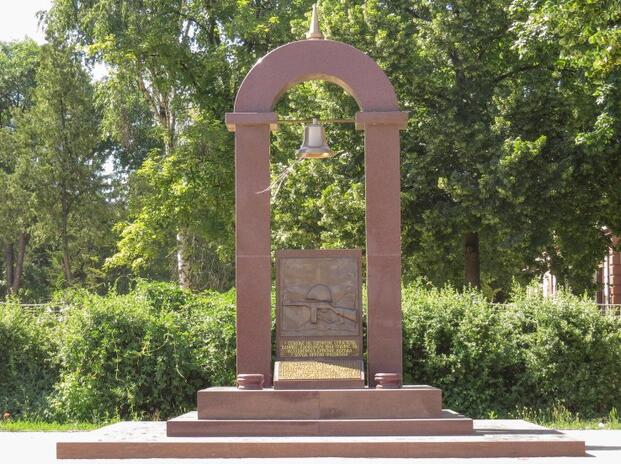
The Niš incident is the only direct military engagement between American and Soviet forces that both nations acknowledged. In 2015, Russia sponsored a monument in Niš to commemorate the incident. A second monument followed in 2022, which clearly shows American planes attacking a convoy.
The likely reasons for the incident lies in outdated intelligence, visual similarity between aircraft, a lack of coordination, and the fog of war. Edwinson’s failure to report suggests he knew his group made a serious error.
For 15 minutes on Nov. 7, 1944, American and Soviet pilots fought each other while their nations remained allies against Nazi Germany. Within six months, Germany would surrender and soon after the Allied alliance would collapse as the Cold War emerged. The Niš incident foreshadowed the tensions to come.
Story Continues
Read the full article here