




European nations are constructing a defensive wall along NATO’s eastern frontier as Western intelligence agencies warn Russia could be militarily capable of attacking the alliance within five years. To assist with the construction of defensive works, German forces are returning to the region on a permanent basis for the first time since World War II.
Lithuania also announced Monday it will build a major training facility near the strategically critical Suwalki Gap, part of a coordinated effort which includes tank production, physical fortifications and permanent troop deployments designed to deny Russia any opportunity to sever the Baltic states from NATO. The buildup has accelerated this month as diplomatic efforts to end the war in Ukraine have stalled and Russian President Vladimir Putin threatens Europe with direct conflict.
An Integrated Defense Strategy
Beyond the announcement of a new training facility, Lithuania finalized an agreement on December 11 to locally assemble 41 Leopard 2A8 main battle tanks by 2030.
Meanwhile, Poland launched construction of its East Shield defensive network in November 2024, a 2.5-billion-dollar system spanning 700 kilometers along borders with Russia and Belarus. Germany will deploy engineering units to Poland in April 2026 on a two-year mission to support that construction.
These developments address the vital strategic goal of defending the Suwalki Gap corridor that connects the Baltic states to the rest of NATO. If Russia seizes this narrow strip, Estonia, Latvia and Lithuania will be isolated from land reinforcements.
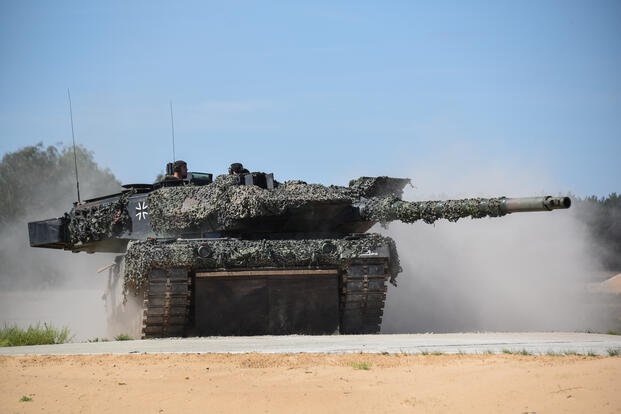
Back in April, Germany activated the 45th Panzer Brigade in Lithuania to bolster defenses in the region. Once the brigade is brought to the full strength it will consist of nearly 5,000 soldiers armed with Leopard tanks and armored vehicles. It marks the first foreign deployment of a German brigade since WWII.
This force, along with Lithuania’s new training facility, positions much-needed forces directly adjacent to the vulnerable corridor. The ability to pursue local tank production creates a vital repair capability that eliminates dependence on supply lines Russia could attack. If conflict breaks out and the gap comes under attack, damaged NATO armor can be restored to combat readiness locally rather than requiring movement to facilities in Germany.
Meanwhile, Poland’s East Shield program is continuously building an array of anti-tank ditches, concrete barriers, reinforced bunkers, surveillance systems, counter-drone technology and ammunition depots along the Polish border. Satellite imagery from late November confirmed some of the initial fortifications near Kaliningrad were under construction.
“This is not just Poland’s border. It is the border of the European Union and NATO,” Polish Deputy Defense Minister Cezary Tomczyk said in May 2024.
The German deployment to Poland and Lithuania highlights Germany’s commitment to bolster NATO defenses. This comes as the U.S. under the Trump administration has urged European countries to contribute more for their own defense.
The Historical Significance of the German Deployment
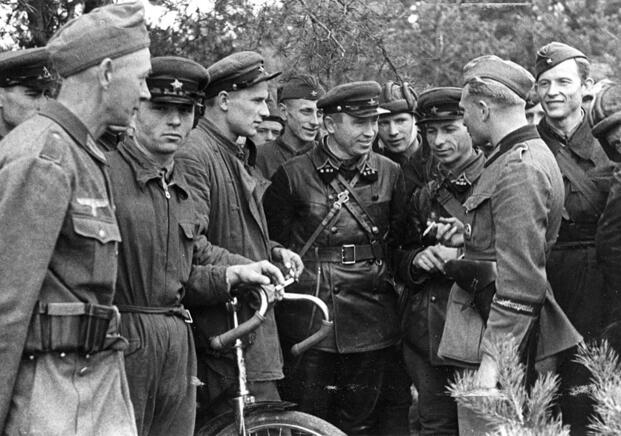
The historical symbolism behind the German deployments to Eastern Europe is important. Nazi Germany invaded and occupied Lithuania from June 1941 through January 1945 in a brutal campaign that killed roughly 90 percent of the country’s 250,000-strong Jewish population. It was among the highest Holocaust victim rates in Europe.
Lithuania had already suffered Soviet occupation since June of 1940 until the German invasion, then endured another period of brutal Soviet control after World War II. The country regained independence in 1990 after five decades of foreign control throughout the Cold War.
The new German deployment serves the opposite purpose as it aims to defend Lithuanian sovereignty rather than destroying it. Berlin’s permanent deployment to Lithuania and the engineering mission to Poland represent a unique and symbolic reversal of history as former adversaries now cooperate against a shared threat from the east.
For Poland, which suffered over one million losses during WWII and the Holocaust against the Nazis and a brutal “liberation” and occupation under the Soviets, the deployment is equally impactful.
Diplomatic Failure Accelerates Military Preparations
Five hours of talks in Moscow on December 2 between Putin and U.S. envoys on the subject of ending the war in Ukraine produced no results, with Putin declaring certain provisions of the American peace proposal were “absolutely unacceptable.”
Days later, Putin threatened to seize all remaining Ukrainian-held territory in the Donbas region “by force” and warned Europe directly, “We are ready” for war with the continent.”
European leaders described the situation as reaching a “critical moment.” NATO Secretary-General Mark Rutte warned December 11 that “we are Russia’s next target,” warning of a potential conflict “on the scale of war our grandparents and great-grandparents endured.”
Intelligence assessments support these warnings. Germany’s Federal Intelligence Service predicts Russia will rebuild and refit its forces sufficiently enough for offensive operations against NATO by 2029. This, along with Russia’s increased cooperation with China and North Korea gives reason for NATO to worry.
Institute for the Study of War analyst George Barros said at a November Baltic security conference, “You might not choose to have a war with the Russians, but the Russians are certainly choosing to prepare to conduct a war against you. We’re watching every day how they’re preparing their economy, operational concepts and their military thinking about the next war.”
Denmark’s intelligence service reported in October that Russia continuously conducts hybrid warfare against NATO through repeated airspace violations, aggressive naval operations and suspected infrastructure sabotage. Multiple Russian drones penetrated Polish, Romanian, Estonian and Latvian airspace in September, triggering NATO’s Eastern Sentry campaign.
NATO Geographic Vulnerability
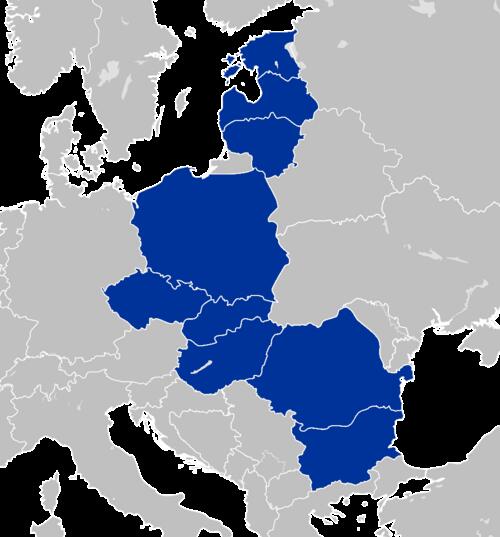
Russia maintains approximately 12,000 troops in Kaliningrad alone, bolstered by Iskander ballistic missiles capable of striking targets across the Baltic region. Belarus also hosts Russian training grounds within miles of Polish and Lithuanian borders.
Any Russian seizure of the Suwalki corridor would sever Estonia, Latvia and Lithuania from reinforcement, potentially isolating the Baltic states before NATO could respond. Only two major roads and a single rail line traverse the gap.
Current NATO doctrine aims to prevent any territorial loss, including the Suwalki Gap, through the use of impenetrable forward defenses. The goal would be to inflict massive losses on Russian forces, minimize lost territory, and give NATO enough time to prepare a massive response.
Lithuania’s new training facility, Germany’s permanent stationing of a brigade there, Poland’s East Shield fortifications and the plan for local tank production all serve as part of this strategic plan.
Lithuania also raised its defense spending to between 5 and 6 percent of the nation’s GDP, becoming the first NATO member to hit the benchmark advocated by U.S. President Donald Trump.
The New Strategic Reality
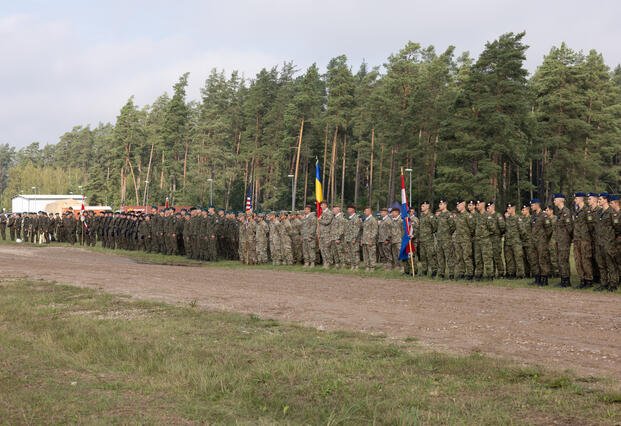
The massive defense effort in Eastern Europe shows that NATO members have realized the continent must assume responsibility for its own security. With the Trump administration reviewing global force deployments and pressing NATO members to increase spending, European powers are establishing military infrastructure necessary for sustained defense without guaranteed American support.
The parallels to Cold War-era Europe are numerous. Russia is currently invading its neighbor, while it continues to rebuild its military capacity. The country also conducts aggressive military exercises and launches periodic incursions along NATO borders.
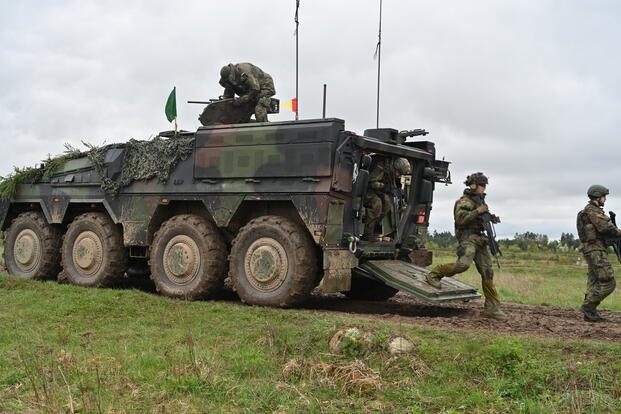
Meanwhile, European nations continue to construct physical barriers, expand their defense budgets and station increasing numbers of combat forces along the Eastern border. Even Germany has permanently stationed troops abroad for the first time in eight decades.
Germany plans to spearhead the effort to defend NATO against any Russian land provocations. The deployment of German forces to Poland and Lithuania represents a resurgence of German military spending and preparation.
However, modern warfare now incorporates cyber attacks, drone swarms and GPS jamming alongside conventional forces. Russia lacks the Soviet Union’s ideological appeal and economic power, relying instead on military force and energy leverage.
Many have argued that these developments mark a new Cold War. Whether that is true or not, Russia poses a serious threat to European sovereignty while NATO members increase their cooperation to deter any further Russian attacks.
Story Continues
Read the full article here