



The United States still fields the world’s most capable airmen and some of the most advanced aircraft ever built. But according to Rep. August Pfluger, a retired Air Force fighter pilot and former F-22 Raptor pilot, the service is facing a growing challenge that Congress can no longer afford to ignore.
During an interview with Military.com, Pfluger warned that the Air Force has become both the oldest and smallest in its history at a time when China is rapidly expanding its military power and the demand for American airpower continues to grow.
We have the most incredible airmen, the most incredible and competent leaders up and down the chain of command, incredible weapon systems, Pfluger said. But we are in fact the smallest and also the oldest Air Force that we’ve ever been.
The Texas Republican, who served more than 20 years in uniform before coming to Congress, said the issue is not one of quality. Rather, it is a question of capacity, readiness and whether the Air Force can modernize quickly enough to meet future threats.
“We’ve got to reverse that trend,” he said.
The Air Force Is Smaller and Older Than Ever
Pfluger’s warning comes as military leaders and lawmakers continue debating the future size and composition of the force.
While the Air Force remains technologically dominant in many areas, much of its fleet continues to age. Some aircraft currently flying were first designed during the Eisenhower administration, while many operational aircraft are now more than four decades old.
“We have literally aircraft from the 1950s that are still flying,” Pfluger said. “Most aircraft are over 40 years old.”
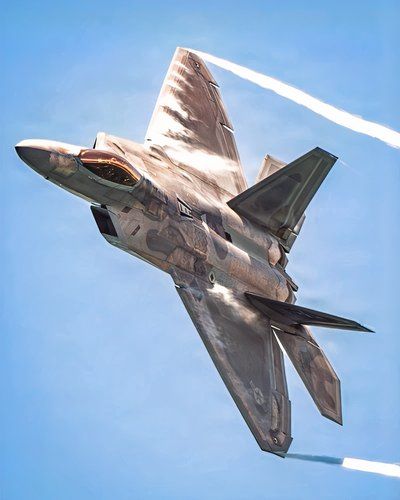
Even aircraft once viewed as revolutionary are beginning to show their age. The F-22 Raptor entered service more than 20 years ago, and many of the aircraft Pfluger flew during his career are now approaching two decades of operational service.
The age of the fleet affects more than maintenance costs. Older aircraft require more maintenance hours, experience lower mission-capable rates, and often result in reduced flying opportunities for pilots.
Pfluger contrasted today’s environment with his early years in the Air Force, when pilots routinely logged hundreds of flying hours annually.
“When I was a lieutenant, we were getting hundreds of flight hours a year,” he said.
 Aging Aircraft Are Creating a Growing Readiness Challenge
The congressman argues that the Air Force’s aging fleet is becoming increasingly problematic because demand for airpower is growing rather than shrinking.
Recent military operations have repeatedly demonstrated the strategic value of air and space power, often allowing the United States to achieve objectives quickly while limiting risk to American personnel.
“Air power and space power have achieved strategic objectives for our country,” Pfluger said. “The demand signal is only increasing.”
That combination of growing operational demand and shrinking capacity is one reason he believes modernization can no longer be delayed.
We’ve got to recapitalize right now,” he said. “Now is the time. There’s a sense of urgency.
Why China Is Driving New Concerns About Air Power
At the center of Pfluger’s concerns is China.
Military leaders have increasingly identified Beijing as the nation’s “pacing threat,” the competitor whose military growth is shaping U.S. force planning and modernization efforts.
“The pacing threat is China,” Pfluger said. “They are developing technology and weapon systems in massive amounts that we need to know, and our public needs to be educated on.”
For Pfluger, the challenge is not hypothetical.
“This is a current threat,” he said.
He argues that any future conflict in the Indo-Pacific would place enormous demands on American air and naval forces, making decisions made today critical to maintaining deterrence tomorrow.
“The Indo-Pacific region is largely going to be fought by air power and sea power,” Pfluger said. “Air power is the one that’s going to be called upon.”
 A Warning Pfluger Has Been Sounding for Months
The interview reflects a broader campaign Pfluger has been leading in Congress to draw attention to Air Force readiness and modernization challenges.
Earlier this year, the former fighter pilot authored a Washington Post opinion piece arguing that while the Air Force remains unmatched in capability, decades of underinvestment have left the service increasingly strained.
In the article, he warned that the Air Force now operates the oldest aircraft and the smallest force in its history while confronting rising threats from China and other adversaries.
More recently, Pfluger joined retired Air Force Lt. Gen. David Deptula and other airpower advocates in a congressional roundtable focused on readiness, modernization and maintaining American air superiority.
He has also advocated for airpower priorities as lawmakers begin work on the next National Defense Authorization Act.
The message has remained remarkably consistent: America still possesses unmatched airpower, but that advantage cannot be taken for granted.

Congress Faces Pressure to Modernize the Force
Pfluger believes Congress has a central role to play in reversing the trend.
He argues that the Department of the Air Force has carried significant responsibilities for decades, including operating two legs of the nation’s nuclear triad while also supporting the growing mission requirements of the Space Force.
The Department of the Air Force has been underfunded for decades.”
The congressman emphasized that strengthening the Air Force should not come at the expense of other services. He repeatedly stressed the importance of maintaining a strong joint force capable of operating across all domains.
Still, he believes lawmakers must prioritize airpower investments given the strategic environment.
“Our Congress has to make a move right now to increase funding for air power, period,” he said.
 More Than Money: Fixing the Defense Industrial Base
Pfluger argues that funding alone will not solve the problem.
He believes Congress must also address acquisition timelines and help the defense industrial base produce aircraft and weapons systems faster.
“It’s not just numbers, it’s not just money,” he said. “We have to go faster in the industrial base. We have to acquire weapon systems quicker. We have to get a better return on the money that we’re spending.”
In public remarks and published commentary, Pfluger has outlined several areas where he believes Congress should focus: increasing readiness funding, accelerating modernization programs, improving oversight of readiness metrics and expanding the pipeline of future airmen and officers.
Together, he argues, those efforts can help preserve America’s long-standing airpower advantage.
The Threat Is Already Here
Throughout his conversation with Military.com, Pfluger repeatedly returned to one theme: urgency.
He acknowledged that reversing decades of underinvestment will take time, but argued that lawmakers no longer have the luxury of postponing difficult decisions.
This is a current threat, Pfluger said. We have to make a move right now.
For the former F-22 pilot, the question is no longer whether the Air Force needs modernization. The question is whether the United States can move quickly enough to maintain its advantage before competitors such as China further close the gap.
“Now is the time,” Pfluger said. “There’s a sense of urgency.”
Read the full article here