




From the dense jungles and tunnel complexes of Vietnam, where he answered more than 380 Explosive Ordnance Disposal (EOD) calls in a single year, to becoming one of the first EOD specialists selected for the original Delta Force, Vining has forged a career defined by technical mastery under extreme pressure and an enduring commitment to his fellow service members.
His path took him through the high-stakes rescue attempt Operation EAGLE CLAW in Iran, the intense combat of Operation URGENT FURY in Grenada, support to a major domestic prison crisis known as Operation POCKET PLANNER, and later roles investigating the Khobar Towers’ bombing and planning for hardened targets.
Today, as an advisor to the EOD Warrior Foundation, Vining continues preserving the institutional memory of a profession that has lost hundreds to the hazards of their work.
With his upcoming memoir “Blasting Through,” he distills those decades of experience into leadership lessons that resonate far beyond the battlefield. In an interview with Military.com, Vining shared these hard-fought lessons that shaped the manuscript.
Vietnam Tunnels and Strategic Lessons
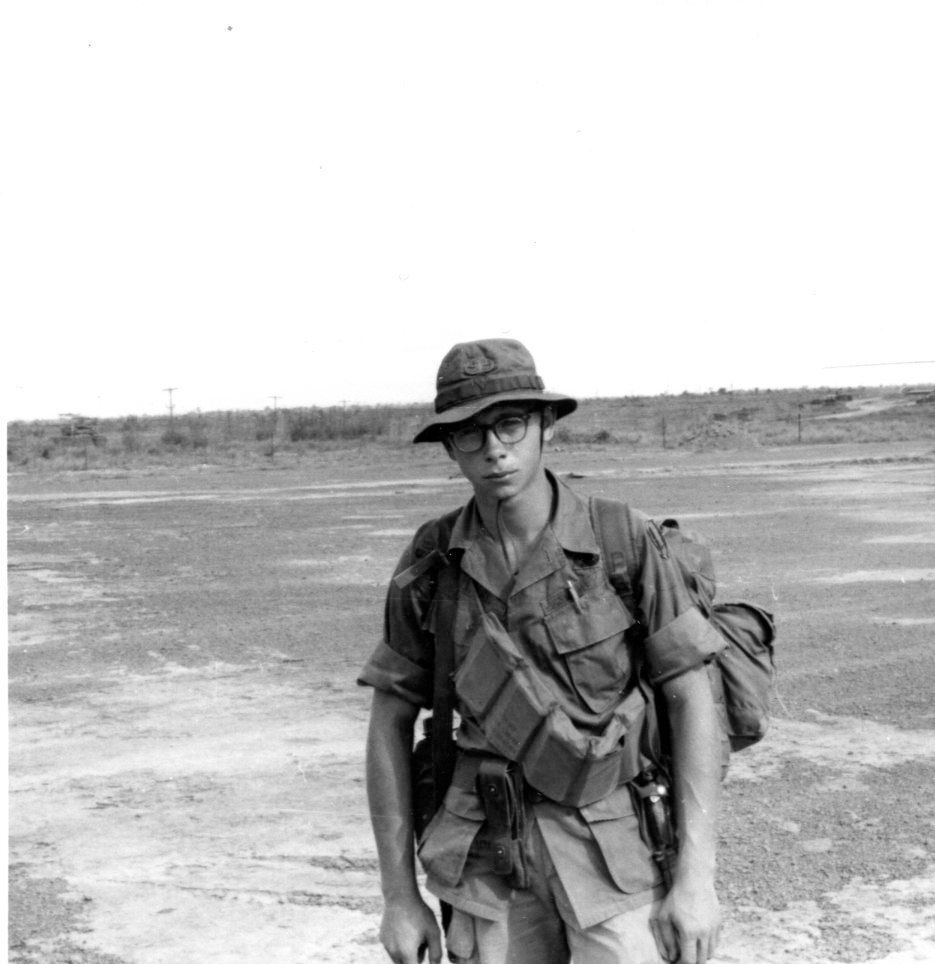
Vining deployed to the Republic of Vietnam in 1970, assigned to the 99th Ordnance Detachment (EOD) at Phuoc Vinh. In one year, he responded to 380 EOD incidents, including dangerous tunnel and cache-clearing operations, at a staggering clip of more than one response per day.
He contextualizes the November 1970 Son Tay raid (a POW rescue attempt that helped inspire the creation of Delta Force), noting intelligence indicators, such as increased SR-71 and U-2 overflights and construction of a nearby Soviet-supported command-and-control complex, that likely prompted the North Vietnamese to relocate the American prisoners beforehand.
From his Vietnam experience, Vining distilled five fundamental requirements he believes any nation should examine before committing forces to foreign soil:
- Establish clear goals and communicate the end state. The American people must understand exactly what the operation aims to achieve.
- Set a realistic timeline. Operations require achievable schedules tied to those goals.
- Guard against mission creep. Leaders must recognize and counter the tendency for objectives to multiply or shift once forces are committed.
- Develop a nation-building plan. Sustainable outcomes demand forethought beyond kinetic operations.
- Maintain a clear exit plan. Knowing how and when forces will depart prevents open-ended commitments.
Vining observed that U.S. forces often underestimate adversaries and struggle to grasp local culture and motivations; patterns he has seen repeated in conflicts over and over again.
He also noted how government communication of operations like the Cambodia incursion sometimes framed de-escalatory actions as escalations in the public eye.
 Operation EAGLE CLAW: The Rescue Attempt That Helped Shape Delta
Vining supported the 1980 attempt to rescue American hostages in Iran, known as Operation EAGLE CLAW.
The rescue mission itself would be aborted, having only five operational helicopters at Desert One out of the eight that started the mission.
Then a U.S. Navy RH-53D Sea Stallion struck the EC-130E Hercules transport aircraft with Vining inside. Vining survived the incident, but eight U.S. service members were tragically killed in the resulting explosion.
The mission would represent the inherent complexities of long-range, joint special operations in denied territory. Delta Force itself traces part of its origin to the recognized need for a dedicated unit capable of executing sensitive rescue and similar high-risk missions, building on lessons from earlier efforts like the Son Tay raid.

Operation URGENT FURY: Combat Realities in Grenada
In October 1983, Vining participated in the U.S. invasion of Grenada as part of Delta Force’s assault on the island’s prison holding political prisoners. He had earlier authored Delta’s fast-rope standard operating procedure, which was planned to be used during the daring mission.
The operation encountered significant friction: last-minute timing changes that desynchronized supporting assets, limited and conflicting maps (including tourist versions with improvised grid overlays), communication difficulties across units, and the absence of expected close air support from an AC-130 gunship that had departed station due to miscommunications on timing.
Indications suggested opposing Cuban and Grenadian forces had received advance warning of the incursion and staged gun pieces accordingly. Vining’s team faced intense small-arms fire during the prison assault; one door gunner was hit immediately, and bullets penetrated the early-model Blackhawk helicopters.
Nineteen personnel were wounded in the initial phases, including aircrew. Seventeen Delta Force Members were wounded, eight helicopter crewmembers were wounded, and one pilot was mortally wounded.
The team shifted to securing a crash site and medical evacuation. Vining noted that while securing American medical students was part of the broader mission narrative, the priority for his element remained the political prisoners held at the facility.
Operation POCKET PLANNER: Breaching Expertise in a Domestic Crisis
In 1987, Vining provided breaching support during an Atlanta federal prison riot involving Cuban detainees. The detainees had been Cuban prisoners and asylum inmates whom Fidel Castro had sent to America under false pretenses during the Carter administration… but under Reagan the decision was made to send them back to Cuba.
As Vining describes, “Life is great in an American prison versus a Cuban prison.” The inmates did not take kindly to the repatriation news, and within short order all hell broke loose. The extent to which the riots escalated resulted in the president waiving the Posse Comitatus Act and sending in Delta Force to assist the FBI in quelling the ensuing hostage crisis.
Delta personnel prepared contingency plans for hardened prisoners, including the infamous Aryan Nation inmate Thomas Silverstein. The operation demonstrated how specialized breaching, observation, and medical skills developed in special operations could transfer effectively to complex domestic support scenarios when requested by lead federal agencies.

Preserving Legacy and Delivering Lessons Forward
Vining’s post-retirement work reinforces the discipline he champions. He authored the definitive history of the original 1970 EOD Memorial dedicated at Indian Head, Maryland; a project that began with a 1969 committee of senior EOD officers from all services raising funds through balls, replica plaques, and medallions to honor the 69 names initially inscribed (now 343).
He recently helped locate next of kin for a Marine Corps EOD Marine killed by sniper fire on Okinawa in World War II, enabling 3rd EOD Company Marines at Camp Hansen to name their new facility in his honor. Arlington National Cemetery officials have also consulted him regarding naming a new tunnel after a deceased EOD/Chemical Corps “tunnel rat” as the cemetery expands.
For today’s EOD technicians and special operators navigating peer conflicts, evolving threats, and the psychological demands of the profession, Vining’s experiences offer significant, tangible perspective: the value of embedding technical specialists early in elite units, the necessity of disciplined planning and clear communication, and the importance of recognizing and addressing moral injury alongside physical and traumatic wounds.
His journey from Vietnam EOD to Delta Force pioneer to an esteemed guardian of the EOD community’s history embodies the very discipline that, as he puts it, grants the freedom to live and serve boldly.
“Blasting Through” Distills Decades of Experience into Actionable Lessons
Vining’s memoir, “Blasting Through,” draws directly from his service as an EOD technician in Vietnam with the 99th Ordnance Detachment (EOD), his selection into Delta Force in 1978 as one of its pioneering EOD specialists, and his subsequent leadership positions in research and development and breaching.
The approximately 90,000-word book spans 30 chapters, with each major operation ending with Vining’s personal reflections on leadership (both the good and the bad that he experienced), ethics, mentorship, and the often-overlooked weight of moral injury.
Moral injury stands out as a central theme of the book. Vining stated:
Moral injury has been wrapped up into PTSD, and PTSD is such a broad thing. We’re trying to break moral injury out, and make people aware of that, and it’s treatable. We can explain to someone suffering moral injuries and rationalize it to the person.
He noted higher suicide rates in EOD and special operations communities, with moral injury, described as survivor’s guilt, the burden of decisions made in chaos, or failing to report unethical acts, as examples of a significant but distinct factor alongside traumatic brain injuries and physical wounds.
“It’s survivor’s guilt. It might not be rational to someone on the outside why someone has survivor’s guilt, but to that person it’s real, and they have it.”
The book is crafted with a broad appeal in mind. Specifically, students of military history, EOD or special operations personnel, as well as civilian corporate leaders seeking practical frameworks for decision-making under pressure, will take great interest.
Vining will narrate portions of the accompanying audiobook, personally delivering his leadership reflections that become practical leadership guides for readers. He even provides questions for frank discussions that military leaders and corporate executives can use as training tools. The manuscript is currently pending defense review; it is expected to be released shortly after that process concludes.
“Blasting Through” will be available following completion of the ongoing defense review process. Vining continues sharing insights on X as @BlastingThrough and through his work with the EOD Warrior Foundation.
Read the full article here