




Eddie Slovik made a series of decisions that turned him into the only American soldier executed for desertion since the Civil War. He wrote and signed a confession admitting his crime. He refused five offers to escape punishment. He told his judge advocate he would desert again. And his case reached General Dwight Eisenhower’s desk at the worst possible moment during the Battle of the Bulge.
More than 21,000 American servicemen faced desertion charges during World War II. Forty-nine received death sentences. Every single one was commuted to prison time except Slovik’s.
What set him apart was not the severity of his desertion but the damning physical evidence he handed his superiors and his apparent belief that the Army would never actually shoot him.
From Criminal to Draftee
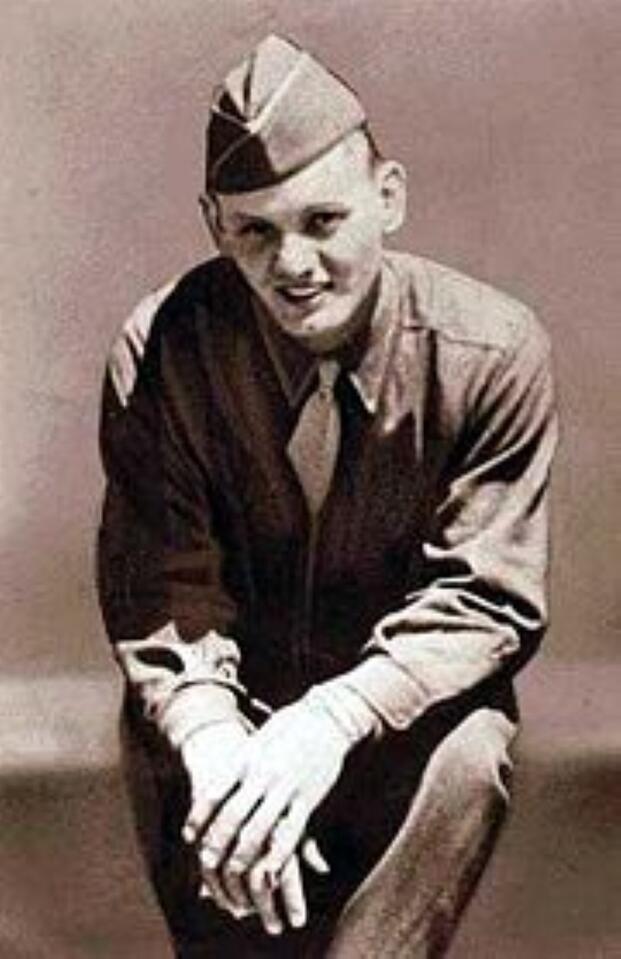
Slovik was born in Detroit on Feb. 18, 1920, to Polish-American parents Josef Slowikowski and Anna Lutsky. At only 12-years-old, he broke into a foundry with friends to steal brass for resale. Between 1932 and 1937, police arrested him repeatedly for petty theft, breaking and entering and disturbing the peace. He ultimately served two separate prison terms, the second after stealing and crashing a car while drunk.
After his April 1942 parole, Slovik found work at Montella Plumbing and Heating in Dearborn, Michigan. He married Antoinette Wisniewski on Nov. 7, 1942, and later worked as a shipping clerk at Chrysler. His criminal record classified him as 4-F — morally unfit for military service.
When the Army lowered its standards to meet personnel needs later in the war, the draft board reclassified Slovik as 1-A. He was drafted Jan. 3, 1944, and completed basic training at Camp Wolters, Texas. He shipped to France in August and was assigned to Company G, 109th Infantry Regiment, 28th Infantry Division.
The Written Confession That Sealed His Fate
On Aug. 25, 1944, Slovik and Private John Tankey took cover during German artillery fire near Elbeuf. They became separated from their replacement group and spent six weeks with a Canadian military police unit. The two performed menial tasks and made no great effort to find their unit. When a new Canadian officer took over, he contacted American authorities and had the men transferred.
When they returned to American lines on Oct. 5, no charges were filed. Replacement soldiers getting lost in combat was a common occurrence.
One day later, everything changed.
On Oct. 8, Slovik told Captain Ralph Grotte he was “too scared” to serve in a rifle company. He asked for reassignment to a rear unit. Grotte refused. Slovik then asked a question that would lead him down the wrong path.
Slovik asked, “If I leave now, will it be desertion?” When Grotte confirmed it would be, Slovik walked away anyway. Grotte urged Tankey to stop him. Tankey tried, but Slovik said his mind was made up.
On Oct. 9, Slovik approached Private William Schmidt, a cook at a military government detachment, and handed him a slip of green paper containing a handwritten confession. The note began “I, Pvt. Eddie D. Slovik, 36896415, confess to the desertion of the United States Army.” He explained he was too scared to move during the shelling. The confession ended with capital letters and misspelled words, “I ran away again, AND I’LL RUN AWAY AGAIN IF I HAVE TO GO OUT THERE.”
Though he did not realize it at the time, Slovik had just done something that set him apart from other deserters. He provided written proof of his crime and his intent to do it again if given the opportunity.
Five Offers, Five Refusals
The cook quickly turned Slovik over to the company commander. After the officer read the confession, he urged Slovik to destroy it before being taken into custody. Slovik refused.
Lieutenant Colonel Ross Henbest made a new offer. Tear up the note, return to the unit, face no charges. Slovik refused again.
Henbest ordered Slovik to write on the back that he understood the confession could be used against him in a court-martial. Slovik wrote the disclaimer and was confined to the division stockade.
Lieutenant Colonel Henry Sommer, the division judge advocate, offered Slovik a deal: return to combat and all charges would be dropped. Slovik told him, “I’ve made up my mind. I’ll take my court-martial.” Sommer later wrote that Slovik truly believed he would face only jail time, which he had experienced before and considered far more tolerable than combat.
Sommer made one final offer. He would transfer Slovik to a different regiment where no one knew of his desertion, so he could start with a clean slate. Slovik again refused. He appeared convinced the Army would imprison him, then release him after the war ended.
During his trial, even the court tried to help the man. One member suggested Slovik could withdraw his written threat to desert again in exchange for all charges being dropped. His defense counsel, Captain Edward Woods, with urging from Slovik, let the trial continue despite multiple chances for leniency.
Slovik’s Trial During the Battle for Hurtgen Forest
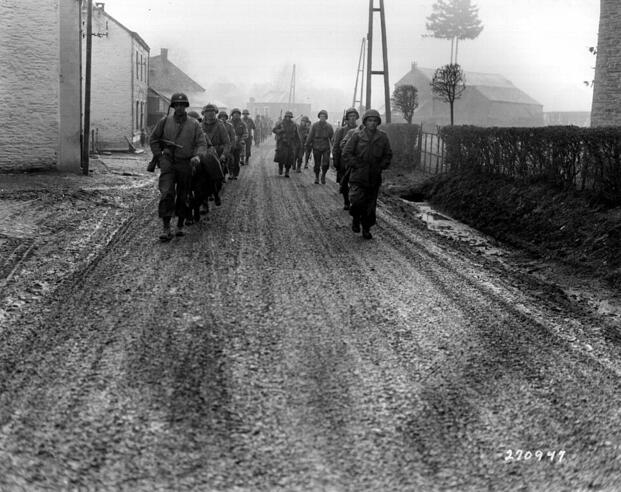
Slovik was charged with two specifications of desertion to avoid hazardous duty on Oct. 19, 1944. His trial took place on Nov. 11, Armistice Day, in a scarred building in Roetgen, Germany.
The 28th Infantry Division was in the middle of the Battle for Hurtgen Forest, one of the longest and costliest engagements American forces fought in World War II. The division had sustained massive casualties fighting through dense woods against determined German defenders. Desertion rates were rising. Some soldiers were wounding themselves to escape combat.
Because most combat officers were fighting at the front, Slovik’s court-martial panel consisted of nine staff officers from other divisions. Captain John Green presented Slovik’s written confession and witnesses who testified about his stated intention to run away.
Captain Woods had mitigating evidence that could have saved his life, including the fact that Slovik had served willingly with the Canadians for six weeks and taken rear-echelon work. But when Woods advised him of his right to testify, Slovik elected to remain silent. He refused to take the stand. He refused even to let Woods present the mitigating evidence on his behalf or write a note defending himself.
Woods was left with nothing to defend his client. All that was needed was enough evidence to convince at least one member of the board to spare Slovik.
Slovik was likely worried that anything other than a guilty plea would see him returned to his unit and sent into combat. However, Slovik’s own written confession and his refusal to explain himself sealed his fate.
The court voted by secret ballot three times because of the sentence’s severity. Each vote was unanimous and found Slovik guilty on all counts. Then the sentence was read to Slovik and the court: death by firing squad.
The sentence shocked Slovik. He had watched other deserters in the stockade receive dishonorable discharges and prison terms. He expected the same.
Eisenhower’s Decision During the Battle of the Bulge
Major General Norman Cota approved the sentence on Nov. 27. Cota had been assistant division commander of the 29th Infantry Division on D-Day and was one of the highest-ranking officers on Omaha Beach. He had no sympathy for desertion while sending thousands of soldiers into combat.
“Given the situation as I knew it in November 1944, I thought it was my duty to this country to approve that sentence,” Cota later said. “If I hadn’t approved it — if I had let Slovik accomplish his purpose — I don’t know how I could have gone up to the line and looked a good soldier in the face.”
Sommer wrote his recommendation for execution, noting Slovik was “a habitual criminal” who had never seen combat and “avows his intent to run again if he has to go out there.”
By the time Slovik wrote his plea to Eisenhower on Dec. 9, he may have realized how deep a hole he had dug himself into. His letter begged for mercy “for the sake of my dear wife and mother back home.” He wrote that he was sorry “for the sins I’ve committed” and signed it “Yours for Victory, Pvt. Eddie D. Slovik.”
But Slovik made a fatal error in his letter. He claimed he did not realize what desertion meant and had no intention of deserting the Army. This was demonstrably false, as he had specifically asked Captain Grotte if leaving would constitute desertion before walking away. The lie likely convinced Eisenhower that Slovik was manipulating the system rather than genuinely seeking redemption.
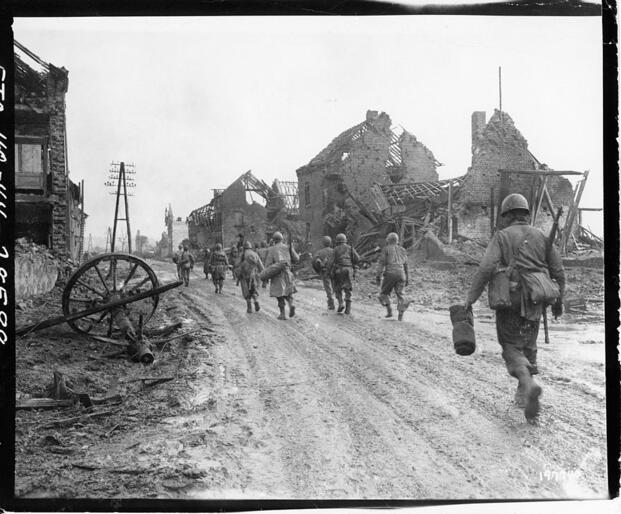
By the time Eisenhower reviewed the case, the German offensive through the Ardennes had begun. The Battle of the Bulge was producing thousands of American casualties while desertions skyrocketed.
Brigadier General E.C. McNeil, the senior Army lawyer in the European Theater, wrote that imposing a lesser sentence on Slovik “would only have accomplished the accused’s purpose of securing his incarceration and consequent freedom from the dangers which so many of our armed forces are required to face daily.”
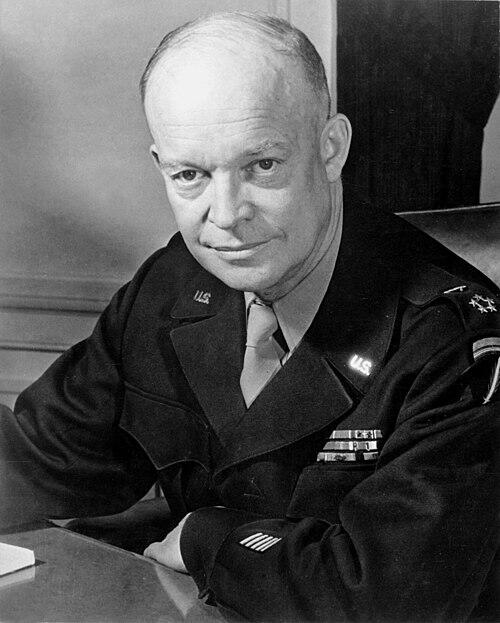
Eisenhower confirmed the execution on Dec. 23, noting it was necessary to discourage further desertions.
The European Theater Board of Review, composed of three Judge Advocate General attorneys, conducted a final review on Jan. 6, 1945. They found Slovik had “directly challenged the authority” of the United States and upheld the sentence.
The Execution of Eddie Slovik
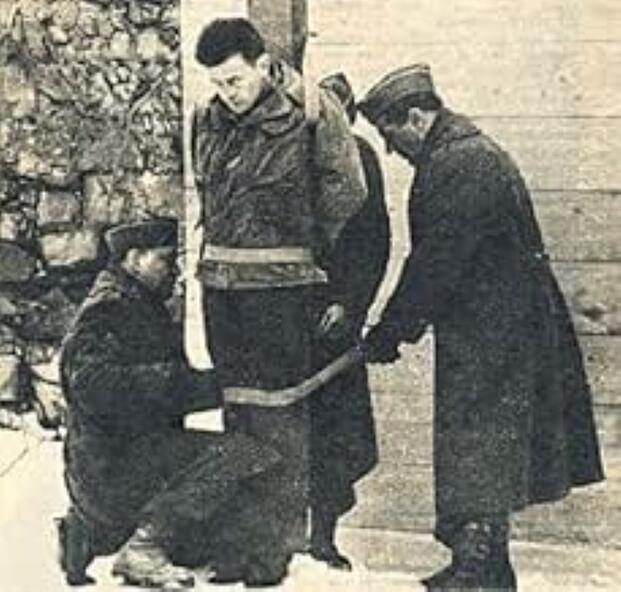
At 10:04 a.m. on Jan. 31, 1945, Slovik was led to the courtyard of a French country house near Sainte-Marie-aux-Mines. His uniform had been stripped of all military insignia. A GI blanket was wrapped over his shoulders against the cold.
Even in his final moments, Slovik refused to believe or accept his role in the outcome of the trial.
As soldiers prepared him, Slovik made his final statement, “They’re not shooting me for deserting the United States Army; thousands of guys have done that. They just need to make an example out of somebody, and I’m it because I’m an ex-con. I used to steal things when I was a kid, and that’s what they are shooting me for. They’re shooting me for the bread and chewing gum I stole when I was 12 years old.”
Chaplain Father Carl Patrick Cummings said, “Eddie, when you get up there, say a little prayer for me.” Slovik replied, “Okay, Father. I’ll pray that you don’t follow me too soon.”
Soldiers strapped Slovik to a post with web belts and placed a black hood over his head. Twelve men from the 109th Regiment formed the firing squad with M1 Garand rifles. Eleven rifles held live rounds, one held a blank.
On the command to fire, eleven bullets struck Slovik. At least four were fatal, ranging from high in the neck to under the heart. An Army physician reported Slovik did not die immediately. The squad was reloading when he was declared dead.
Why Slovik Alone
The Army executed Slovik because he created the perfect set of circumstances that made it impossible not to. He provided written documentation of his crime and his intent to repeat it. He refused every opportunity to return to duty. He gave his defense attorney nothing to work with at trial. Then he lied to Eisenhower in a desperate final appeal. His case reached final review during the war’s bloodiest American battle. And he had a criminal record that made him an unsympathetic figure.
Every decision Slovik made worsened his situation. Where other deserters either returned to duty, accepted lesser sentences, or stayed silent and let the Army struggle to prove their cases, Slovik handed prosecutors everything they needed, refused to elaborate, and then sealed his fate with dishonesty.
Slovik was buried in Plot E of Oise-Aisne American Cemetery at Fere-en-Tardenois, France, alongside 96 other American soldiers executed for crimes including rape and murder. Slovik was the only one executed for a non-violent military offense. Their black headstones have numbers instead of names.
Despite military leaders believing Slovik’s execution was necessary to deter other deserters, the Army made a contradictory decision. They kept it secret. Only the 109th Regiment announced it to its soldiers. No civilian or military newspapers reported it. The execution that was supposed to serve as a warning became a classified event. Slovik’s widow was told only that her husband died under “dishonorable circumstances.”
In 1987, after Slovik’s widow died, a Polish-American veteran raised $5,000 to return Slovik’s remains to Michigan. He was reburied at Woodmere Cemetery in Detroit next to Antoinette.

A Divided Legacy
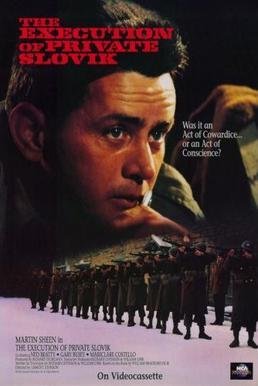
Slovik’s case remained unknown until journalist William Bradford Huie published “The Execution of Private Slovik” in 1954. The Pentagon attempted to block the book. It ultimately became a bestseller and sparked decades of debate. A 1974 NBC television movie starring Martin Sheen brought the story to millions more Americans.
Opinion on Slovik’s execution varies wildly. Some view him as a coward who deserved his fate. Others consider the execution an injustice, arguing the Army made an example of a man unsuited for combat while hundreds of other deserters received only prison time.
One of the judges who voted for Slovik’s death, Benedict Kimmelman, later wrote with regret about the verdict. Kimmelman was captured by German forces during the Battle of the Bulge and spent time as a prisoner of war. Fellow prisoners in German POW camps told him Slovik had volunteered for dangerous minefield clearing work with the Canadians — mitigating evidence never presented at trial.
Historian Carlo D’Este noted in his 2002 biography of Eisenhower that the death penalty was imposed “on a soldier who had committed no violent act.” When Eisenhower was interviewed in 1963, he incorrectly remembered sending his judge advocate general to offer Slovik clemency if he would return to duty. No such offer was ever made.
Chief Army historian S.L.A. Marshall did not learn of the execution until reading Huie’s book nine years later. The secrecy raised questions about whether the Army truly intended Slovik as an example to deter desertion.
Since Jan. 31, 1945, no American soldier has been executed for desertion. The Uniform Code of Military Justice still allows execution for wartime desertion, but the United States has not fought a declared war since World War II. With that, Slovik is the only American soldier executed for desertion since the American Civil War.
Story Continues
Read the full article here