




A World War I epic made by a Marine veteran showed combat stress, disability, and the painful transition back to civilian life long before Hollywood had a word for PTSD.
When The Big Parade opened in 1925, this World War I movie did not behave like a typical silent film. It felt like a national event. Millions of Americans went to see it, including World War I veterans who were still figuring out what “coming home” and military transition meant in a world that had moved on without them. Newspapers across the country, from New York to small-town Missouri, treated its arrival as front-page news.
They were right to. No movie had shown World War I, or the emotional reality of the returning veteran, quite like this.
Directed by King Vidor and shaped by Marine veteran and Belleau Wood amputee Laurence Stallings, The Big Parade follows Jim Apperson, an easygoing young American who enlists in 1917, walks into the mud of France, and comes home wounded and changed. The plot sounds simple. The impact was not.
Almost a century later, the best modern war movies still borrow the film’s structure and themes, even if many viewers no longer recognize the title.
The First Cinematic War Epic About An “Average” Soldier
In the mid-1920s, World War I was still close enough to sting. Many families had lost someone. Veterans were still dealing with injuries, shell shock, and the awkward shift back into civilian life. Studios mostly avoided that reality. They preferred patriotic adventure or avoidance altogether.
King Vidor wanted to break that pattern. He wanted a film that followed “the average guy,” a soldier who was neither a mythic hero nor a bitter cynic. Just a young American caught up in a global catastrophe and then pushed through the painful transition back home.
Laurence Stallings made that possible. He had lived through the war and lost a leg at Belleau Wood. He knew the strange mix of boredom, terror, dark humor, and constant exhaustion that shaped trench life. His stories guided the tone and kept the script honest.
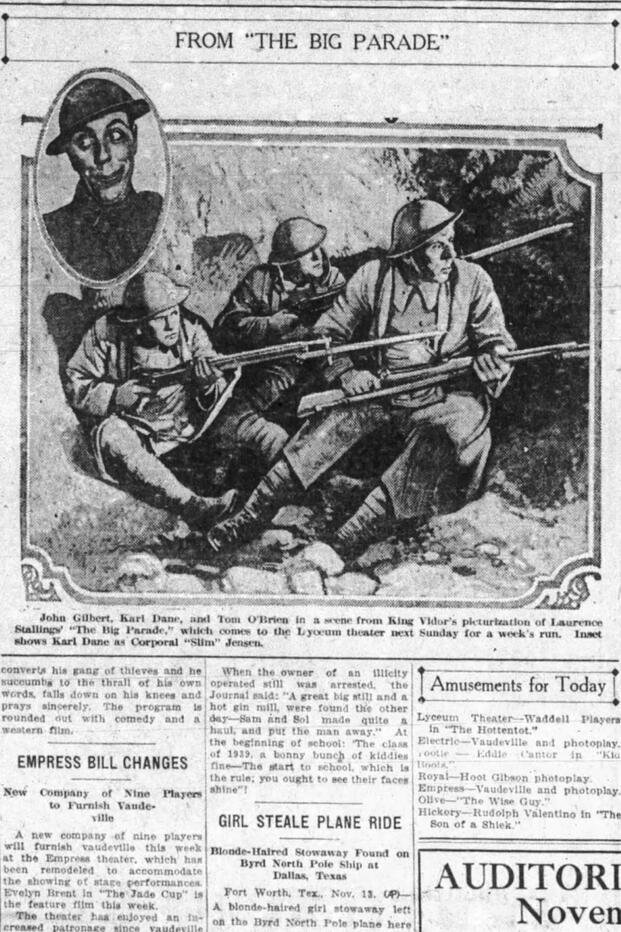
To stage battles on a believable scale, MGM brought in the War Department, which supplied roughly 4,000 troops, rows of trucks, and a flock of planes. Vidor built his key marching scenes around a steady off-camera drumbeat so the extras moved in time, like a single exhausted organism advancing through Belleau Wood toward machine-gun fire.
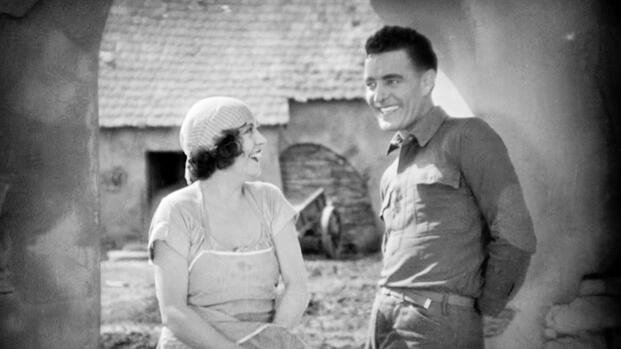
John Gilbert and Renée Adorée brought warmth to the film’s first half. They often improvised small gestures, like the famous chewing-gum lesson, that gave the romance texture and humor. That lightness made the later trench sequences feel even more brutal. Viewers met Jim as a carefree kid, then watched him harden into a combat veteran one shell burst at a time.
For 1925, that blend of affection, shock, and unsentimental realism was something new.
How The Big Parade Became the World War I Movie Everyone Saw
When The Big Parade reached Missouri, the local response matched what was happening nationwide.
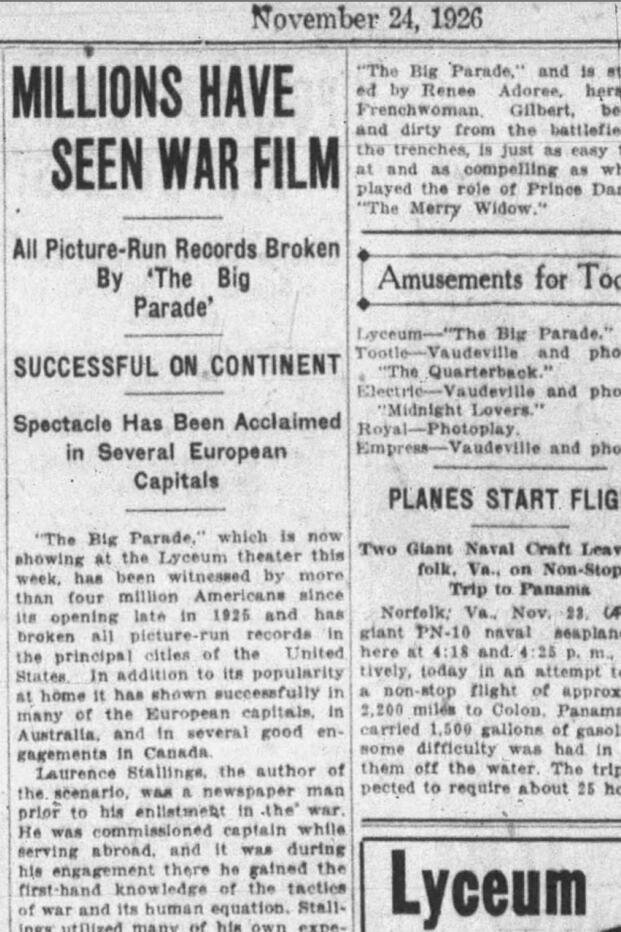
The St. Joseph Gazette splashed the movie across its page under a bold line: “MILLIONS HAVE SEEN WAR FILM.” The copy bragged that the picture had already broken “all picture-run records,” played to huge crowds across Europe, and been seen by more than four million Americans. For a country still figuring out how to remember the war, that kind of reach meant The Big Parade was more than entertainment. It became a shared reference point between veterans, families, and civilians who had never worn a uniform.
Critics did not hold back. The Macon Chronicle-Herald declared:
“THE BIG PARADE IS 100 PER CENT PICTURE,” pointing to the “astonishing unanimity” of reviews and crediting Vidor and Stallings with showing the “truth of the Big show” – the doughboys’ nickname for the A.E.F.’s march to the front. The paper praised the way romance and humor supported, rather than undercut, a story built on real soldier experience.
In St. Louis, crowds packed the Shubert-Rialto. The Globe-Democrat called the movie “infinitely more than a war play,” praising its sincerity, its technical clarity, and its refusal to lean on cheap sentiment. Ads quickly started noting that the film would “stay over at Shubert,” the quiet code theaters used when they extended a hit run.
Other reviewers wrestled openly with its tone. A long St. Louis Post-Dispatch essay pushed back against viewers who called the picture anti-war. The writer argued that its trench scenes carried a “surreptitious glory” in the way they depicted sacrifice and courage under fire. He quoted Jim’s weary trench line – “What the hell do we care after what we have been through?” – and still insisted the images held “the sublimity of death and sacrifice,” even comparing them to the poetry of Joyce Kilmer, Rupert Brooke, and John McCrae.
Across all these reactions, one thread stands out: audiences and veterans felt that The Big Parade had captured something true about their war.
Realistic Combat, Trauma and Military Transition Onscreen
The Big Parade met viewers exactly where they were in the 1920s: skeptical, bruised, and unsure what the war had really accomplished. Instead of delivering a speech about politics, it showed a single soldier’s slow emotional collapse and attempted recovery.
We see mud, boredom, fear, filthy uniforms, jokes between buddies, and the blunt shock of losing those same buddies. We see the small rituals that keep units together and the quiet moments when those rituals fail.
What set the film apart was how carefully it avoided preaching. The German soldiers are human beings, not faceless villains. Jim and his friends are patriotic, but not blindly so. The movie neither condemns nor celebrates the war. It simply shows the cost to the men who fought it and the people waiting for them at home. And it was honest and authentic. So much so, one World War I veteran quoted leaving a screening:
“This could be my buddies and me.”
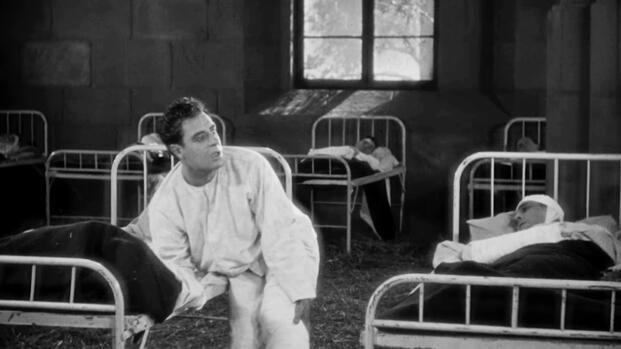
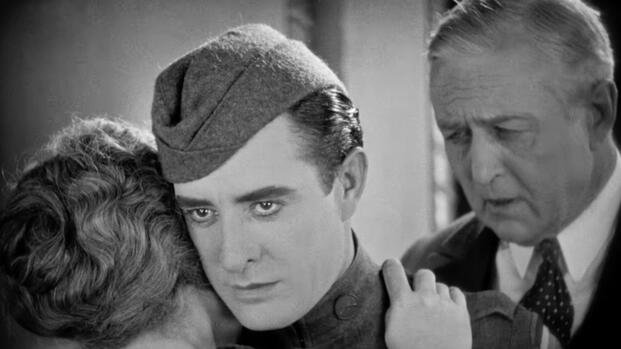
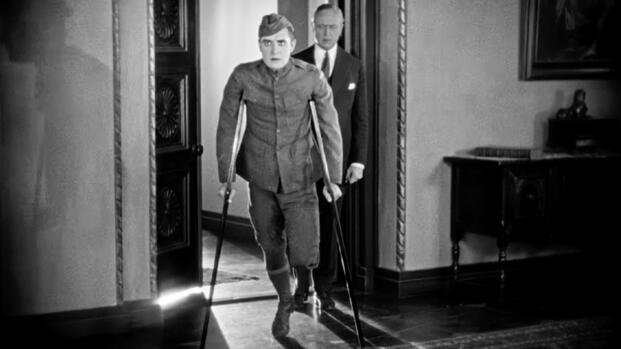
It’s essentially a 1920s version of a military transition story: a combat veteran trying to reintegrate into civilian life with visible and invisible wounds. One brief scene sums up that perspective and will feel painfully familiar to anyone who has gone through military transition or knows a veteran who has. Jim returns home after being wounded. His family insists he “looks great” and tries to pretend everything is normal. He finally snaps: “Don’t kid me – I know what I look like.”
In 1925, that was a startling acknowledgment that some wounds, physical and psychological, do not disappear when the uniform comes off. Today, we would call it a conversation about PTSD, disability, and the emotional side of separating from service. The Big Parade got there decades early.
How A Silent Film Taught Hollywood To Talk About Veterans and PTSD
Modern audiences may not recognize The Big Parade, but modern war movies follow its blueprint in ways that military viewers will spot instantly.
You can see its fingerprints in:
- The structure. A light, almost comic first act that suddenly plunges into chaos and combat.
- The focus is on the average soldier. The story belongs to a regular private, not a general or a superhero.
- The unit bond. The emotional heart of the movie is the relationship between Jim and his buddies, not medals or strategy.
- The homecoming. The film spends time on what happens after the shooting stops, including visible disability and invisible emotional damage.
Five years later, All Quiet on the Western Front used a similar template from the German side. Decades later, films like The Best Years of Our Lives, Platoon, Full Metal Jacket, Saving Private Ryan, and even First Blood echoed themes Vidor mapped out early: camaraderie, trauma, military transition, and the quiet shock of rejoining civilian life after combat.
The Big Parade also changed Hollywood’s business thinking. Regional ads bragging that “millions have seen” the film were not exaggerating. Its box-office run helped turn MGM into a major studio and proved that audiences would pay to see serious, realistic war stories that respected veterans’ experiences instead of flattening them into propaganda.
Later restorations, including a high-profile revival with a new orchestral score in the 1980s and its selection for the National Film Registry in 1992, kept that legacy alive. Film historians still rank it among the greatest war films ever made because its approach feels modern. The film is actually in the Public Domain and free to watch in its entirety online or below–and do yourself a favor, and check it out.
‘The Big Parade’ (1925) with John Gilbert: Full movie directed by King Vidor
When one 1920s critic wrote that the movie “attained essential truth and irradiated it with romance and humor,” he accidentally described the formula that later directors would chase for the next hundred years.
Why The Big Parade Still Matters To Modern Veterans And Military Families
For today’s Military.com readers, The Big Parade works as both a time capsule and a reminder that the core challenges of service, combat, and coming home have not changed as much as we think.
Long before VA disability ratings, transition assistance programs, or the language of PTSD, King Vidor and Laurence Stallings were already asking what happens to an ordinary soldier when the war is over but the war will not leave him. They were asking how families respond when the son who comes home is not the same one who left, and what it means to build a new life with visible scars and invisible ones.
It is not the spectacle that lingers most; it is the soldiers’ small moments. A shared cigarette. A stick of gum. A quiet wave goodbye as trucks rattle off toward the front. Those details anchor the film more firmly than any explosion.
The Big Parade might not trend on streaming platforms, and it may not show up on many casual “best war movies” lists, but it shaped the genre more than almost any title that followed. For anyone interested in how cinema portrays service members, veterans and their families, and the long road of military transition back to civilian life, it’s worth seeking out.
In its own quiet, black-and-white way, this forgotten silent epic taught Hollywood how to march – and how to show what happens after the march ends.
Story Continues
Read the full article here