




Despite making up about 31-43% of all active-duty service members in the U.S. military, minority personnel often feel underrepresented and overlooked.
However, through a spoken word series, “Stories, Our Truth: A National Tour Honoring the Legacy of Us,” minority veterans are getting an opportunity to share deeply emotional, thought-provoking stories that prove to be therapeutic and healing.
The series, a collaboration between Minority Veterans of America (MVA) and The Chamberlain Network (TCN), kicked off in April in Chicago, featuring transgender veterans. The second tour stop was in New York City, highlighting stories of Asian American, Native Hawaiian and Pacific Islanders who served.
The group’s next event, slated for June 20 at the Baltimore War Memorial, will honor Black and African American veterans and will be emceed by KeSean “Sean Black” Johnson, an Army veteran.
The storytelling series runs through September with shows in Richmond, Seattle and San Antonio set for July, August and September. By the end of the tour, the series will have featured about 40 veterans sharing stories in seven cities with at least six storytellers taking the stage at each show.
Lindsay Church, executive director and co-founder of MVA, said the organization started the series in 2019 in Richmond, Va.
“We brought together LGBTQ+ service members and veterans to share their experiences serving under discriminatory policies and to reflect on how those policies shaped their lives long after they left the military,” Church told Military.com. “Since then, we’ve hosted storytelling events both in person and virtually that have highlighted the experiences of veterans across race, gender, sexual orientation, religion and other identities. At their core, these events have always been about creating space for people to tell their own stories in their own words.”
Late last year, MVA teamed with TCN, a group focused on preserving democracy through veteran leadership, to expand the series nationally. Since early 2025, federal policies have shifted to attempt to ban transgender service members from the military and curb healthcare for LGBTQ+ veterans. Church felt it was time to act.
“At a moment when many communities are seeing their histories erased, politicized, or pushed to the margins, we felt an urgency to create spaces where veterans could speak honestly about their lives and experiences,” Church said. “This tour is about preserving those stories and creating opportunities for connection. At a time when people are being told they don’t belong or that their experiences don’t matter, we’re creating space to listen to one another and to recognize that these stories are part of our shared history.”
Church said storytelling builds connection, not just with other veterans but with civilians seeking a better understanding of military life.
“In a moment when conversations about identity, patriotism and belonging are often reduced to political talking points, storytelling creates an opportunity for something more human,” Church said. “It allows people to move beyond assumptions and connect with experiences they may never have encountered otherwise. People often tell us that they saw themselves in a story, learned something they didn’t know, or connected with an experience that challenged their assumptions. We’ve seen tears, laughter, moments of reflection and conversations that continue long after the event.”
Veterans who’ve told their stories to an audience of mostly strangers have left the experience feeling less alone, Church said, which is the most impactful part of the event for her.
“Whether they’re the ones on stage or sitting in the audience, they’re reminded that their experiences matter and that they’re part of something larger than themselves,” Church said.
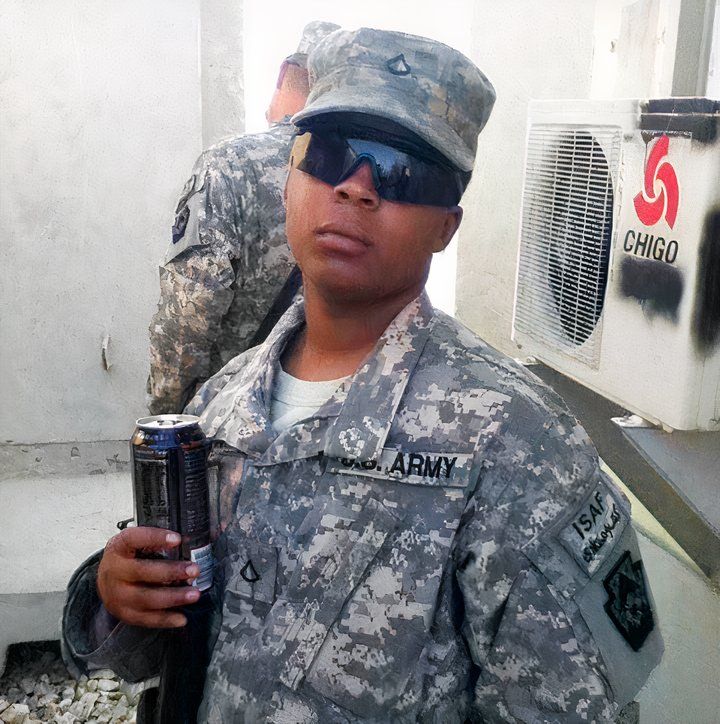 Share Experiences Together
As a woman of color and a gay veteran, Keturah Johnson felt isolated at times while serving in the Army National Guard in Pennsylvania.
Realizing she would likely face some discrimination in the military, she joined anyway, feeling it was a worthy challenge. Johnson, a combat veteran, served from 2009-2015. She currently works in the aviation industry.
Military life has rough patches for most veterans, but the scrutiny Johnson faced was even more intense.
“Sometimes you were seen, and sometimes you were not. The discrimination I experienced was not always straightforward or directed at me individually, though it was always evident,” Johnson told Military.com. “A lot of the aggression I came across was negative, generalized comments about entire communities, people of color, women, or LGBTQ+ folks that were different from the stereotypical archetype of a service member or veteran.”
Johnson said she joined the storytelling tour because representation matters, especially in a time when she feels society can cure some of its ills through connection and active listening.
“We need to share lived experience with each other,” she said.
When Johnson’s on stage, she experiences gratitude for a receptive audience, but also feels “anger, joy, nervousness and peace all at once.”
Read the full article here